


When a nail pierces your tire on the highway, the repair decision you make in the next few minutes — or at the shop — directly affects how long that tire will safely carry you down the road. A tire plug wins for speed and roadside convenience, a tire patch delivers a stronger and more durable seal, and a plug-patch combo is the only method that industry authorities consider a complete, permanent repair. Understanding which repair lasts longer comes down to how each method physically interacts with the puncture, and whether it addresses the damage from the inside, the outside, or both.
Choosing between a plug and a patch is not simply a matter of preference — it depends entirely on the situation in front of you. A plug can be inserted in minutes at the roadside without removing the tire from the wheel, making it an accessible emergency tool. A patch, by contrast, requires dismounting the tire, preparing the inner liner with a buffer and vulcanizing cement, and is almost always a shop repair. Each method has a defined role, and using the wrong one for the wrong puncture is a safety risk.
The type of puncture you are dealing with further narrows your decision. Plug-eligible punctures are small, straight, and located in the tread area. Patch-eligible repairs cover a wider range of tread damage and are preferred when permanence is the goal. Neither method is appropriate for sidewall or shoulder damage, where the only safe answer is a full tire replacement.
Beyond the plug-patch debate lies a third option that most drivers do not know by name: the combination plug-patch repair, which is the single industry-accepted standard for a safe, permanent fix. Below, this article walks through exactly how each method works, what the data says about durability, and the specific situations that call for each — including when no repair at all is the right choice.
What Is a Tire Plug and How Does It Work?
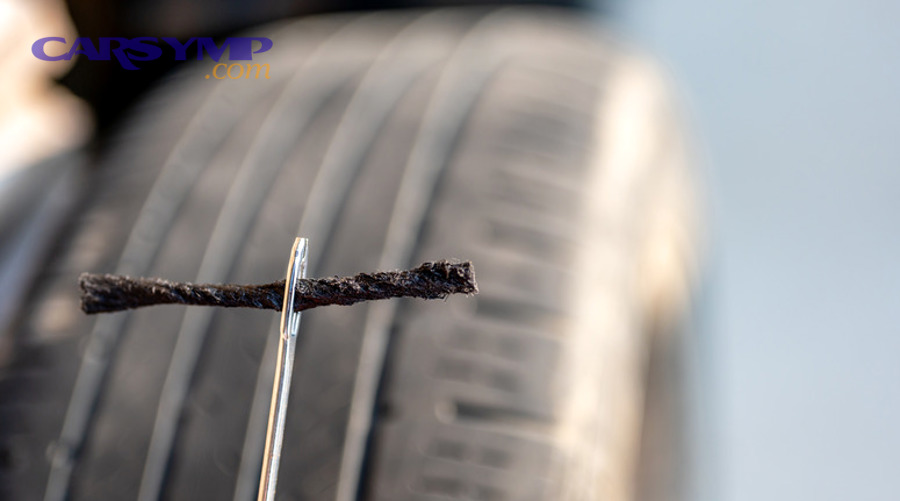
A tire plug is a pliable, adhesive-coated rubber cord inserted directly into a tire puncture from the outside, designed to expand inside the puncture channel and seal the hole without removing the tire from the wheel.
To better understand its role in tire puncture repair, it helps to look at both what a plug does well and where its physical design falls short.
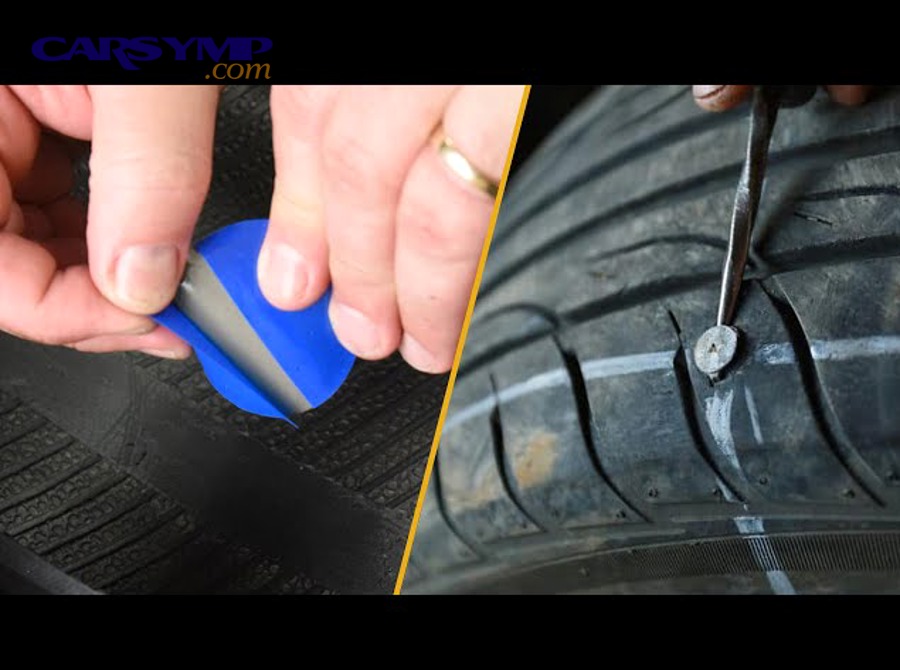
The plug itself is made of a flexible rubber or rubber-compound string, sometimes coated with a sticky adhesive. Repair kits available at most auto parts stores include the plug strings, a T-handle reamer tool with rasping edges to clean and roughen the puncture channel, and an insertion tool used to push the plug approximately two-thirds of the way into the tire. The entire process can be completed at the roadside in under 10 minutes without a jack stand, tire mounting machine, or professional training. Because the tire never leaves the wheel, the inner liner is never inspected — a key limitation that industry bodies use to classify the plug as a non-permanent repair.
What Are the Advantages of Using a Tire Plug?
The primary advantages of a tire plug center on speed, accessibility, and cost, making it the dominant choice for emergency roadside situations.
- Speed: A plug repair can be completed in 5 to 10 minutes at the side of the road with no specialized equipment.
- DIY-friendly: The kits are compact, lightweight, and designed for use by non-professionals. Most drivers can learn the process in one attempt.
- Low cost: A complete tire plug kit typically costs between $10 and $25, covering multiple repairs.
- No tire removal required: The wheel stays on the vehicle throughout the process, reducing the time and tools needed.
- Effective for small, straight tread punctures: For a nail or screw embedded in the central tread area, a plug can hold air reliably long enough to reach a tire shop for a proper repair.
These advantages make the tire plug a valuable first-response tool — not a final solution, but a reliable bridge between the roadside and the repair shop.
What Are the Limitations of a Tire Plug?
Despite its convenience, a tire plug carries several meaningful limitations that disqualify it as a permanent or universal repair solution.
- No internal inspection: Because the tire is never removed from the wheel, any internal damage caused by driving on a flat — such as cord damage or liner cracking — goes undetected.
- Plug degradation over time: The rubber cord can loosen, harden, or shift inside the puncture channel, gradually allowing air to seep past the seal.
- Cannot address angled or large punctures: A plug works best in a straight, narrow hole. Any puncture wider than ¼ inch or entering the tire at an angle will not seat the plug correctly.
- Ineffective on sidewalls and shoulders: The flexing forces in the sidewall and shoulder are too intense for a plug to maintain its seal, and attempting this repair risks a blowout.
- Not industry-approved as a standalone permanent repair: The U.S. Tire Manufacturers Association (USTMA) explicitly states that an external plug alone is not a complete or safe permanent repair.
What Is a Tire Patch and How Does It Work?
A tire patch is a thin, flexible piece of vulcanized rubber bonded to the inner liner of a tire using rubber cement, creating an airtight seal over the puncture from the inside.
Specifically, the patch works in the opposite direction from a plug — rather than filling the hole from the outside in, it covers the puncture from the inside out, bonding permanently with the tire’s inner surface.

Installing a patch requires a tire technician to fully dismount the tire from the rim. Once the inner liner is accessible, the technician uses a low-speed buffer to roughen the area around the puncture, ensuring the vulcanizing cement creates a permanent molecular bond with the rubber. The patch is pressed firmly onto the prepared surface and rolled with a stitcher tool to eliminate any air pockets. This process creates a seal that, when properly executed, is designed to last for the remaining life of the tire.
What Are the Advantages of Using a Tire Patch?
A tire patch offers a stronger, more reliable repair than a standalone plug because it seals the puncture from within, where air pressure cannot force it loose.
- Superior durability: Patches bond chemically with the inner liner, creating a seal far less likely to degrade or shift over time compared to a plug.
- Addresses the inner liner directly: Any cracking or minor damage to the liner visible during the inspection can be identified before the patch is applied.
- Suitable for larger punctures: Patches can cover punctures up to the maximum repairable size of ¼ inch and are preferred when the hole is too large for a plug to seal reliably.
- Manufacturer-recommended: Tire manufacturers and industry bodies consistently recommend patching as the more reliable repair option for permanent results.
- Long-lasting bond: A correctly applied patch, made with vulcanizing cement, is intended to remain bonded for the full lifecycle of the tire.
What Are the Limitations of a Tire Patch?
While a patch outperforms a plug in durability, it carries its own set of important limitations that affect both its practical use and long-term safety.
- Requires tire removal: A patch cannot be applied without fully dismounting the tire from the rim, which requires professional equipment such as a tire mounting machine.
- Higher cost and time investment: Professional patch installation typically costs between $20 and $45, and the repair process takes 15 to 30 minutes at a shop.
- Leaves the puncture channel unsealed: A standalone patch covers the inner liner but does not fill the hole running through the tread rubber itself. Over time, moisture entering this open channel can rust the tire’s internal steel belts, leading to tread separation — a serious failure mode that develops silently.
- Not suitable for sidewall damage: Like plugs, patches cannot safely repair punctures in the sidewall or shoulder of the tire, where flexing forces will cause the patch to fail.
- Cannot repair punctures at extreme angles: Punctures entering the tire at a steep or irregular angle compromise the flat bonding surface the patch needs to adhere properly.
Tire Plug vs. Patch: Which Repair Lasts Longer?
A tire patch lasts longer than a standalone plug in the vast majority of repair scenarios, while a combination plug-patch repair outlasts both by addressing the puncture from two directions simultaneously.

However, the durability comparison between plug and patch is more nuanced than a simple ranking. To better understand, it is worth examining each method’s permanence claim directly.
The following table summarizes the key durability and safety differences between a tire plug, a tire patch, and a combination plug-patch repair. This comparison draws on criteria used by the U.S. Tire Manufacturers Association (USTMA) and the Tire Industry Association (TIA) when evaluating repair methods.
| Criterion | Tire Plug | Tire Patch | Plug-Patch Combo |
|---|---|---|---|
| Seals inner liner | No | Yes | Yes |
| Fills puncture channel | Yes | No | Yes |
| Internal inspection required | No | Yes | Yes |
| Approved as permanent repair | No | Partially | Yes |
| DIY-friendly | Yes | No | No |
| Lifespan potential | Months to years (variable) | Life of tire (if bonded correctly) | Life of tire |
| Risk of steel belt corrosion | High | Moderate | Low |
| Cost (professional) | $10–$25 (DIY) | $20–$45 | $25–$50 |
Is a Tire Plug a Permanent Fix?
No, a tire plug is not a permanent fix. Industry authorities including the USTMA explicitly classify a standalone external plug as a temporary repair that should only be used to safely drive a vehicle to a professional shop for a complete internal inspection and permanent repair.
The reason comes down to physics and material behavior. A plug is pressed into the puncture channel from the outside and relies on friction and adhesion to stay in place. Over time — particularly under the heat, pressure cycles, and flexing stress of highway driving — the rubber cord can harden, shrink, or shift, allowing air to gradually escape. More critically, because the tire is never removed during a plug repair, any structural damage to the cords or belts caused by driving on a deflated tire remains undetected. Driving on a tire with hidden internal damage poses a blowout risk that no plug can prevent. For these reasons, a plug is best understood as a bridge repair — reliable enough to reach the shop, but not a substitute for one.
Is a Tire Patch a Permanent Fix?
A tire patch creates a bond with the inner liner that is designed to be permanent, but calling it a fully permanent repair overstates its completeness because it leaves the puncture channel itself open to moisture and contamination.
This distinction matters more than most drivers realize. The patch’s adhesive bond with the vulcanized rubber of the inner liner is strong and durable — when properly installed, it will not lift or peel for the remaining life of the tire. However, the gap running through the tread rubber from the outside is left unsealed. According to AAA’s automotive guidance, moisture entering this unsealed channel can corrode the steel belts embedded in the tire’s structure, eventually causing tread separation. This failure does not show from the outside and may develop over months or years of normal driving. A patch alone, therefore, provides a strong interior seal but leaves a hidden vulnerability that the plug-patch combo is specifically designed to eliminate.
When Should You Use a Tire Plug vs. a Patch?
There are three primary situational categories that determine when to use a tire plug vs. a patch: the size of the puncture, its location on the tire, and the urgency of the repair context.
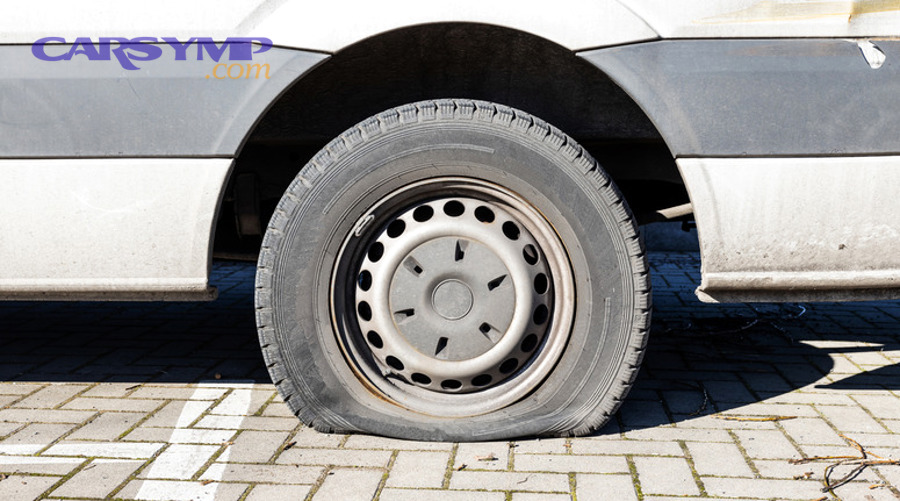
To begin, understanding these criteria allows drivers to make the safest and most cost-effective repair decision rather than defaulting to whichever method is most convenient.
What Types of Punctures Can Be Repaired With a Plug?
A tire plug is appropriate for punctures that meet all of the following conditions simultaneously — failing any one of these criteria disqualifies the plug as a safe repair option.
- Location: The puncture must be in the central tread area only, away from the shoulder and at least ½ inch from the edge of the tread where the steel belt begins.
- Size: The puncture diameter must be no larger than ¼ inch (approximately 6mm).
- Angle: The puncturing object must have entered the tire at a straight or near-straight angle, leaving a clean, narrow channel.
- Condition: The tire must not have a previous repair nearby, and the tread depth must be sufficient to support continued use.
- Context: The plug is being used as an emergency measure to safely drive to a shop for a full inspection and permanent repair.
Common puncture causes that typically meet these criteria include nails, screws, and other thin, straight road debris embedded in the central tread.
What Types of Punctures Require a Patch?
A tire patch — or more accurately, a plug-patch combo — is required when the driver needs a permanent repair and when the puncture size and location allow for one.
The patch is the correct choice in the following situations:
- Larger punctures up to ¼ inch: When the hole is too large for a plug to create a tight seal, the patch’s surface-area bonding provides the coverage needed.
- When an internal inspection is needed: Any time a tire has been driven flat, even briefly, dismounting is necessary to check for liner damage — and a patch or combo repair can be applied during that same visit.
- When the driver is not returning to the shop immediately: A patch is the only repair appropriate when the goal is a lasting fix rather than a temporary one.
- Shop-based tire puncture repair steps: A professional technician will dismount the tire, buff and clean the inner liner, apply vulcanizing cement, press and roll the patch, remount the tire, inflate to spec, and perform a final leak test.
Can You Repair a Tire Sidewall With a Plug or Patch?
No, a tire sidewall cannot be repaired with either a plug or a patch, and attempting to do so creates a significant blowout risk that no repair material can safely prevent.
The sidewall and shoulder of a tire flex repeatedly with every rotation of the wheel. This constant flexing generates heat and mechanical stress that tears apart any seal — whether a plug, a patch, or a combo — within a short period of use. Additionally, the sidewall is structurally thinner than the tread area and contains the load-bearing cords that give the tire its shape under pressure. A compromised sidewall is a structural failure, not a surface puncture, and it cannot be restored to safe condition by sealing the surface hole. When a puncture is not repairable using a plug or patch — due to sidewall location, excessive size, overlapping previous repairs, or visible belt damage — full tire replacement is the only safe course of action.
Is the Plug-Patch Combo the Best Tire Repair Option?
Yes, the plug-patch combination repair is the best tire repair option for a permanent, safe fix of a punctured tread because it is the only method endorsed by both the U.S. Tire Manufacturers Association (USTMA) and the Tire Industry Association (TIA) as a complete repair.
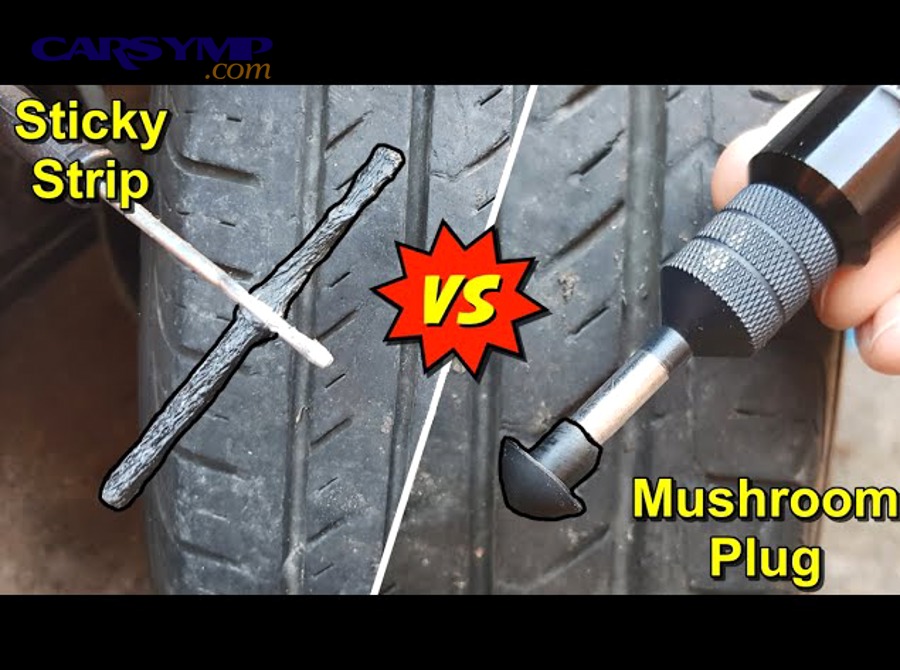
Moreover, the plug-patch combo eliminates the individual weaknesses of both standalone methods simultaneously — sealing the inner liner like a patch while filling the puncture channel like a plug.
How Does a Plug-Patch Combo Repair Work?
The plug-patch combination repair is a single-piece unit in which an integrated rubber stem (the plug portion) is pulled through the puncture channel from the inside while the flat patch portion bonds to the inner liner, completing the repair from both directions in one operation.
The Tire puncture repair steps at a shop for a plug-patch combo proceed as follows:
- Tire dismounting: The technician removes the tire from the rim using a mounting machine to gain full access to the inner liner.
- Damage inspection: The inner liner is examined for belt damage, cord separation, or cracking caused by driving on a flat.
- Surface preparation: A low-speed buffer roughens the bonding area around the puncture on the inner liner without generating heat that could damage the rubber.
- Vulcanizing cement application: A coat of vulcanizing cement is applied to both the prepared liner surface and the patch base, allowing it to partially cure before the patch is pressed in.
- Plug-patch insertion: The integrated stem of the combo unit is pushed through the puncture from the inside out, while the patch body is pressed firmly against the liner.
- Stitching: A stitcher tool rolls firmly across the patch surface to eliminate any trapped air pockets and ensure a full bond.
- Trim and remount: The excess stem protruding from the tread is trimmed flush. The tire is remounted, inflated to the manufacturer’s specified pressure, and tested for leaks.
How Does the Plug-Patch Compare to a Standalone Plug or Patch in Terms of Safety?
A plug-patch combo is safer than both a standalone plug and a standalone patch because it addresses the two failure modes that each individual method leaves unresolved.
- Standalone plug vs. combo: A plug fills the channel but leaves the inner liner unsealed. Under sustained pressure and heat, a plug can work loose, allowing slow air loss. It also bypasses the internal inspection step entirely.
- Standalone patch vs. combo: A patch seals the liner effectively but leaves the puncture channel open to moisture. Over months of driving, water entering this channel corrodes the steel belts, creating a hidden structural failure risk.
- Combo repair: The integrated unit seals the liner (patch function) and fills the channel (plug function) in a single operation. Internal inspection occurs as part of the process. The result is a repair that industry authorities consider complete — one that restores the tire’s structural integrity and eliminates both air loss and moisture intrusion as ongoing risks.
According to guidelines published by the Tire Industry Association (TIA), the combination plug-patch, applied after proper surface preparation, is the only repair method that meets the industry standard for a safe, permanent tire repair and restores the tire to its original performance envelope.
What Else Should You Know Before Choosing a Tire Repair Method?
Beyond the plug vs. patch comparison, three specialized factors — vehicle drivetrain type, tire design category, and total repair cost — can significantly affect which repair is the right call in specific situations.
In addition, knowing precisely when a tire is no longer repairable at all is one of the most important safety boundaries any driver can understand.
Does the Type of Vehicle Affect Whether You Should Plug or Patch a Tire?
Yes, vehicle drivetrain type directly affects tire repair decisions — particularly for all-wheel drive (AWD) and four-wheel drive (4WD) vehicles, where mismatched tire circumferences across all four wheels can damage expensive drivetrain components.
AWD and 4WD systems distribute torque across all four wheels simultaneously. When one tire has been repaired and has slightly different tread depth than the others — even by a few millimeters — the difference in rolling circumference creates a continuous speed mismatch between wheels. Over time, this forces the AWD center differential or transfer case to compensate, generating heat and mechanical wear. Many AWD vehicle manufacturers specify that all four tires must be replaced simultaneously if the tread depth difference exceeds 4/32 inch (approximately 3mm). For a driver with high-mileage tires on three corners and a recently repaired tire on the fourth, a plug-patch repair may still be viable — but the tread depth of the repaired tire should be measured against the remaining three before deciding to repair rather than replace.
Can Speed-Rated or Run-Flat Tires Be Repaired With a Plug or Patch?
Speed-rated tires can generally be repaired with a plug-patch combo if the puncture meets standard repairable criteria, but run-flat tires are a different matter — most manufacturers advise against repairing run-flat tires after any puncture event.
Run-flat tires are constructed with reinforced sidewall inserts that allow the tire to support the vehicle’s weight even with zero air pressure for a limited distance and speed. When a run-flat is driven on after a puncture — even within its rated range — the internal structure sustains stress that is not visible from the outside. Because the damage cannot be fully assessed, most tire manufacturers and run-flat-specific guidelines recommend replacing the tire rather than repairing it. High-speed-rated tires (rated V, W, or Y for speeds above 149 mph) also carry stricter repair tolerances per TIA guidelines, and some manufacturers void the speed rating if a repair has been performed. Drivers of performance vehicles should confirm with the tire manufacturer whether a repaired tire retains its original speed rating.
How Much Does a Tire Plug vs. Patch Repair Cost?
A DIY tire plug costs $10 to $25 for the full kit, a professional patch or plug-patch combo at a repair shop costs $20 to $45 including labor, and a full tire replacement — the alternative when a puncture is not repairable — ranges from $80 to $250 or more depending on tire size and brand.
The cost difference between a plug kit and a professional plug-patch repair is relatively small, which reinforces the argument for choosing the shop-based combo repair whenever possible. Spending an additional $15 to $30 over a DIY plug delivers an internal inspection, a certified permanent repair, and the peace of mind that the tire has been evaluated by a trained technician. The table below outlines the typical cost range for each repair method to help drivers weigh their options clearly.
| Repair Method | Who Performs It | Estimated Cost | Permanence |
|---|---|---|---|
| Tire plug (DIY) | Driver (roadside) | $10–$25 (kit) | Temporary |
| Tire patch (shop) | Technician | $20–$40 | Near-permanent |
| Plug-patch combo (shop) | Technician | $25–$50 | Permanent |
| Full tire replacement | Technician | $80–$250+ | N/A |
When Is It Too Late to Repair a Tire — and Should You Replace It Instead?
A tire is beyond repair and must be replaced when the puncture is not repairable due to its location, size, angle, or the presence of pre-existing structural damage — and no plug, patch, or combination method can make it safe again.
The following conditions each individually disqualify a tire from repair:
- Sidewall or shoulder puncture: As covered above, the flexing forces in these zones prevent any repair from holding.
- Puncture larger than ¼ inch in diameter: This exceeds the maximum size that a plug, patch, or combo can reliably seal.
- Tread depth below 2/32 inch: A tire at or below minimum legal tread depth should be replaced, not repaired — the repair investment is not justified on a tire already at end of life.
- Overlapping repairs: A puncture that falls within or adjacent to a previous repair site creates a compromised zone where neither repair can achieve a full bond.
- Visible belt separation, bulging, or bubbling: These indicate internal structural failure that no surface repair addresses. A blowout is likely under sustained highway load.
- Puncture at an extreme angle: An entry angle greater than approximately 25 degrees from perpendicular prevents the combo stem from seating correctly in the channel.
- Damage from running flat for an extended distance: Internal cord and liner damage caused by extended flat driving may not be repairable even after dismounting.
When a puncture is not repairable, the only safe response is tire replacement. Attempting a plug or patch on a tire that falls into any of the categories above creates a false sense of security and elevates the risk of sudden, catastrophic tire failure at highway speed — a situation where the consequences extend well beyond a flat tire.
In short, the plug vs. patch decision is not simply about convenience or cost — it is a safety call. A plug buys you time; a patch seals the liner; a plug-patch combo is the only method that does both at once and meets the industry standard for a complete repair. Knowing the limits of each method, and recognizing when no repair is the right answer, is the most important tire knowledge any driver can carry.