


Your car tires need to be replaced when the tread depth falls to 2/32 of an inch or below, when the tires are 10 or more years old regardless of visible condition, or when you notice visible damage such as bulges, cracks, or sidewall cuts that compromise structural integrity. These are not arbitrary numbers — they are the safety thresholds established by leading tire manufacturers including Michelin, Bridgestone, and General Tire, backed by decades of engineering research and real-world crash data. Knowing when to act on these signs is one of the most important safety decisions a driver can make.
Beyond the basic thresholds, understanding how to check your tires at home is equally critical. Most drivers wait until they notice a flat or a handling problem before inspecting their tires — but by then, the damage is often already done. Simple methods like the penny test and the quarter test give you a fast, reliable tread depth guide that requires no tools, no appointment, and no mechanical expertise. Checking your tires monthly takes less than five minutes and can prevent a dangerous blowout at highway speed.
Knowing when a tire is worn is only half the equation. The other half is understanding how many tires to replace and whether swapping out just one or two worn tires is safe — or whether replacing all four is the smarter move. The answer depends on your vehicle’s drivetrain, the condition of your remaining tires, and where on the axle the worn tires sit. Getting this decision wrong can cause uneven handling and, in the case of all-wheel-drive vehicles, expensive drivetrain damage.
Finally, driving on tires that are overdue for replacement carries consequences far beyond a poor ride. Worn tires extend stopping distances, dramatically increase hydroplaning risk in rain, and raise the likelihood of a sudden blowout at speed. According to the National Highway Traffic Safety Administration (NHTSA), approximately 11,000 motor vehicle crashes each year are tire-related, and more than 600 people die in those crashes — many of which were preventable with timely tire maintenance. This article covers every warning sign, every safety threshold, and every decision point a driver needs to replace tires at the right time.
What Are Car Tires and Why Does Their Condition Directly Affect Your Safety?
Car tires are the pressurized rubber components that form the only physical contact point between your vehicle and the road surface, making their condition the single most consequential variable in your car’s ability to brake, steer, and maintain stability. Without adequate grip, every other safety system in your vehicle — ABS, traction control, electronic stability control — becomes significantly less effective, because all of those systems depend on the tire’s ability to transmit force to the pavement.
To better understand why tire condition is a life-or-death matter, it helps to recognize that tires degrade through two independent processes that often occur simultaneously.
How Do Tires Wear Out Over Time?
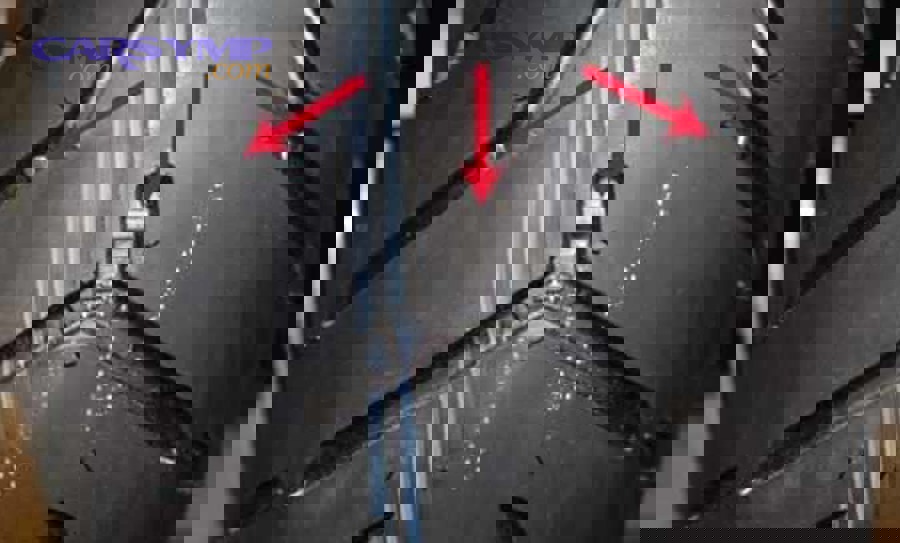
Tires wear out through two distinct mechanisms: physical tread erosion from friction and mileage, and chemical rubber degradation from age, heat, UV exposure, and ozone. Understanding both processes explains why a tire with plenty of tread can still be unsafe — and why the date code on your sidewall matters just as much as how the tire looks.
- Physical tread wear occurs every time the tire rotates against the road surface. Braking, cornering, and acceleration all accelerate this process. Aggressive driving habits — hard stops, sharp turns at speed, rapid acceleration — can reduce tread life by 30 to 50 percent compared to smooth, consistent driving on the same tire model.
- Rubber compound aging is invisible from the outside in its early stages. Heat, ozone, and UV radiation break down the polymer chains in the rubber over time, causing the material to harden, lose elasticity, and eventually crack. A tire stored in a garage away from sunlight ages more slowly than one sitting on a vehicle parked outside in a hot climate — but all tires age, regardless of use.
- The dangerous combination occurs when a tire has been lightly used (low mileage) but is six or more years old. Drivers often assume such a tire is “practically new” because the tread looks deep. In reality, the rubber compound may have degraded to the point where wet-weather grip and blowout resistance are significantly compromised.
What Is the Minimum Safe Tread Depth for Car Tires?
The minimum legal tread depth in the United States is 2/32 of an inch (1.6 mm), which is the threshold at which a tire must be replaced by law. However, safety experts and tire manufacturers widely recommend beginning the tire replacement process at 4/32 of an inch — because at that depth, wet braking performance begins to deteriorate meaningfully.
This tread depth guide gives drivers a two-stage framework for action:
| Tread Depth | Condition | Recommended Action |
|---|---|---|
| 6/32″ or deeper | Good | Continue use; inspect monthly |
| 4/32″ | Marginal | Begin shopping for replacements |
| 2/32″ | Legal minimum | Replace immediately |
| Below 2/32″ | Illegal / Dangerous | Do not drive; replace now |
The table above summarizes the four key tread depth benchmarks and what action drivers should take at each stage. All modern tires include built-in tread wear indicator bars — small raised rubber bridges sitting at the bottom of the tread grooves at exactly 2/32″. When the tread surface wears flush with those bars, the tire has reached the end of its legal and safe service life.
What Are the Key Warning Signs That Tell You It’s Time to Replace Your Tires?
There are six primary warning signs that indicate it is time for tire replacement: tread depth at or below 4/32″, visible sidewall damage, bulges or blisters on the tire surface, persistent vibration while driving, tire age beyond six years, and a cracked or brittle rubber surface. Each of these signals a different mode of tire failure, and any one of them alone is sufficient reason to act.
Specifically, these warning signs fall into four categories — visual, physical, performance-based, and age-based — and drivers who understand all four are far better positioned to catch a problem before it becomes a roadside emergency.
Is the Penny or Quarter Test Still a Reliable Way to Check Tire Tread Depth?
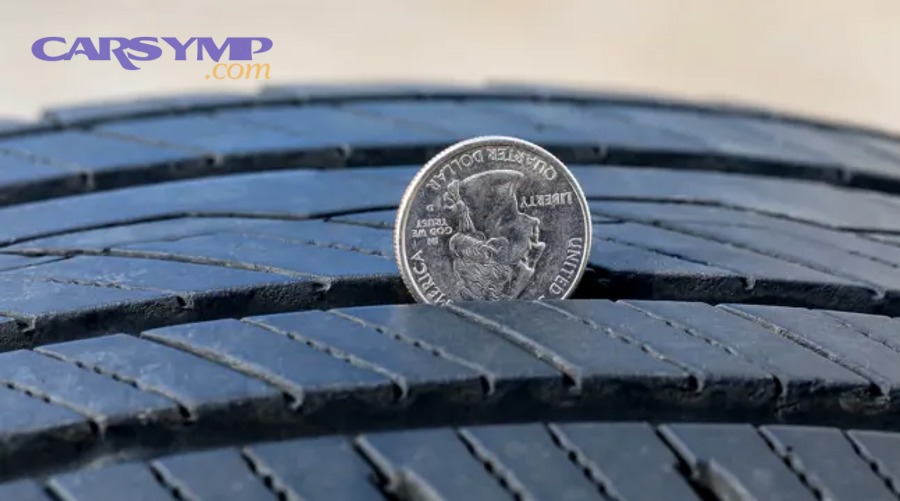
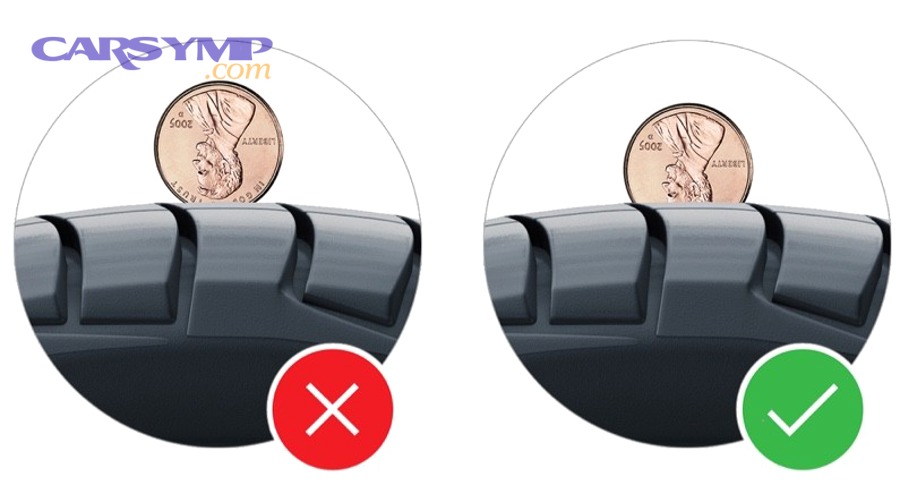
Yes, both the penny test and the quarter test remain reliable, practical methods for checking tread depth at home — but the quarter test sets a safer threshold and is the standard recommended by most tire safety experts today.
- Penny test: Insert a penny upside down into a tread groove with Lincoln’s head pointing into the tire. If you can see the top of Lincoln’s head above the tread, your tread depth is at or below 2/32″ — replace the tire immediately.
- Quarter test: Insert a quarter upside down into the tread groove. If the top of George Washington’s head disappears into the tread, you still have at least 4/32″ remaining. If you can see his full head above the tread, start shopping for replacements now — don’t wait until you hit the legal minimum.
- Check all four tires, and test multiple grooves on each tire, particularly in the areas that show the most visible wear. Uneven results across grooves on the same tire can indicate alignment or inflation problems, not just normal wear.
- Built-in tread wear indicator bars provide a permanent, tool-free alternative. When those raised bars are flush with the tread surface, you are at exactly 2/32″ and must replace the tire.
According to Consumer Reports’ tire program manager Ryan Pszczolkowski, drivers should begin shopping for replacements at 4/32″ and complete the tire swap before the tread reaches 2/32″ — because waiting until the legal minimum significantly degrades wet-weather braking and traction.
What Do Cracks, Bulges, and Sidewall Damage on a Tire Mean?
Cracks, bulges, and sidewall damage are structural warning signs indicating that a tire’s integrity has been compromised and replacement is required, often immediately regardless of remaining tread depth.
- Sidewall cracking (also called ozone cracking or weather checking) appears as small surface fissures running along the sidewall or between tread blocks. It is caused by the breakdown of the rubber compound due to UV exposure, ozone, and age. Shallow surface crazing may be cosmetic, but deep cracks that expose the underlying cords are a blowout risk.
- Bulges and blisters are among the most dangerous signs of all. They indicate that the internal structural cords of the tire have broken, allowing air pressure to push against the outer rubber layer. A bulge on a tire is essentially a countdown to a blowout — it can fail suddenly and without warning, especially at highway speed.
- Cuts and punctures require a judgment call: small punctures in the tread area (not the sidewall) that are ¼ inch or smaller in diameter may be repairable with a proper plug-and-patch repair. Any cut or puncture in the sidewall is non-repairable — the tire must be replaced, full stop.
Can Vibration or Unusual Noise While Driving Signal a Tire Problem?
Yes, persistent vibration or unusual noise while driving can signal a serious tire problem — including uneven tread wear, internal belt separation, or structural damage — and warrants immediate professional inspection.
- Vibration that begins suddenly or worsens at certain speeds (particularly between 45 and 70 mph) may indicate internal belt separation inside the tire, which is a precursor to blowout failure.
- Uneven wear patterns — such as cupping, feathering, or one-sided wear — cause rhythmic thumping or humming noises that often worsen with speed. These patterns also indicate that alignment, inflation, or suspension issues are accelerating tire wear.
- Not all vibration is tire-related. Wheel imbalance, worn suspension components, and misaligned wheels can produce similar symptoms. However, a tire-related cause should always be ruled out first, because the consequences of driving on a failing tire are more immediate and severe.
How Old Is Too Old for a Tire — Even If the Tread Still Looks Good?
A tire is considered too old for safe use at 10 years from its manufacture date, with a strong recommendation for professional inspection every year after year five — even if the tread looks deep and the tire shows no visible damage.
- To find your tire’s age, locate the DOT code on the sidewall. The last four digits indicate the manufacturing date: the first two digits are the week, and the last two are the year. For example, a DOT code ending in 2422 means the tire was manufactured in the 24th week of 2022.
- Michelin, Bridgestone, and General Tire all recommend removing tires from service at 10 years regardless of remaining tread depth or outward appearance, because rubber compound degradation at the molecular level is not visible to the naked eye.
- Most experts also recommend treating tires older than six years with caution, particularly in hotter climates where UV and heat exposure accelerate aging. If your vehicle is stored outdoors year-round in a warm region, the practical safe life of your tires may be shorter than the 10-year guideline.
How Many Miles Do Car Tires Typically Last Before Replacement?
Most car tires last between 25,000 and 50,000 miles before requiring replacement, though this range varies significantly based on tire category, driving habits, climate, and maintenance practices. High-performance and ultra-high-performance tires often wear out faster — sometimes in 15,000 to 25,000 miles — while premium all-season touring tires with high treadwear ratings can exceed 60,000 to 80,000 miles under ideal conditions.
In addition to mileage, drivers should understand that the factors accelerating or slowing tire wear are largely within their control — making proactive maintenance one of the most cost-effective ways to delay the need for tire replacement.
What Factors Shorten or Extend the Lifespan of Your Tires?
Five key factors determine how quickly or slowly car tires wear down: driving habits, climate and road conditions, inflation pressure, wheel alignment, and tire design.
- Driving habits: Hard braking, aggressive cornering, and rapid acceleration generate excess friction heat and accelerate tread erosion. Smooth, anticipatory driving on the same tires on the same roads can nearly double tread life compared to aggressive driving.
- Climate and road conditions: Hot climates accelerate rubber aging; rough or unpaved roads increase surface wear. Road debris, potholes, and curb strikes can cause hidden internal damage that shortens usable tire life even without visible exterior damage.
- Inflation pressure: Under-inflated tires flex excessively, generating heat and causing accelerated wear on the outer tread edges. Over-inflated tires wear down faster in the center. NHTSA recommends checking tire pressure monthly and before long trips, using the vehicle manufacturer’s recommended PSI — not the maximum printed on the tire sidewall.
- Wheel alignment and balance: Misaligned wheels cause feathered, one-sided, or diagonal wear patterns that consume tread unevenly and rapidly. A vehicle that pulls to one side or whose steering wheel is off-center almost certainly has an alignment issue that is quietly destroying the tires.
- Tire design and speed rating: Tires with higher speed ratings (W, Y) use softer rubber compounds that grip better but wear faster. Standard all-season tires with lower speed ratings sacrifice some handling sharpness in exchange for significantly longer tread life.
Does Tire Rotation Help Delay the Need for Replacement?
Yes, regular tire rotation meaningfully extends the usable life of a full set of tires by distributing wear more evenly across all four positions — and it is one of the most cost-effective maintenance practices available to any driver.
- Front tires on front-wheel-drive vehicles wear significantly faster than rear tires, because they handle both steering and driving forces. Without rotation, the front tires can wear down to the replacement threshold while the rear tires still have 50 percent or more of their tread life remaining — forcing an early and unnecessary partial replacement.
- The standard rotation interval is every 5,000 to 7,500 miles, or with every oil change if you’re on a 5,000-mile oil change schedule. Rotation patterns vary by vehicle type (FWD, RWD, AWD, directional tires), so consulting the owner’s manual or a tire professional ensures the correct pattern is used.
- Rotation extends tire life but does not reset the clock on rubber aging, nor does it correct structural damage. A rotated tire that is eight years old still needs to be evaluated for age-related degradation regardless of how evenly the tread has worn.
Is It Time to Replace All 4 Tires at Once, or Just the Worn Ones?
Replacing all four tires at once is the recommended approach when the worn tires are significantly different in tread depth from the remaining tires — but the decision depends on your vehicle’s drivetrain, the current tread depth of all four tires, and how much variation exists between them. For most everyday drivers on FWD sedans or SUVs, replacing in pairs is acceptable under specific conditions; for AWD vehicle owners, replacing all four simultaneously is often a mechanical necessity, not merely a preference.
However, understanding the rules for partial replacement is just as important as knowing when to do a full set — because installing tires incorrectly can create handling imbalances that feel subtle at normal speeds but become dangerous in an emergency.
What Happens If You Only Replace 2 Tires Instead of 4?
Replacing only two tires is acceptable in certain situations, but only if the newer tires are installed on the rear axle — regardless of whether the vehicle is front-wheel-drive, rear-wheel-drive, or all-wheel-drive.
- The reason rear installation is mandatory for the newer tires comes down to oversteer physics. If the rear tires have less grip than the front tires, the rear of the vehicle tends to slide outward during hard cornering or emergency braking — a condition that is extremely difficult to control, especially for inexperienced drivers.
- Installing the better tires on the rear axle means the front may lose grip first, which creates an understeer condition. Understeer is far more intuitive to manage: the car simply goes straight rather than rotating — and drivers can respond by releasing the throttle or easing off the brakes.
- The U.S. Tire Manufacturers Association (USTMA) formally recommends this rear-axle priority rule for all two-tire replacement scenarios, regardless of which tires (front or rear) are the ones showing wear.
- The maximum acceptable tread depth difference between the new pair and the remaining pair is approximately 4/32″. A greater difference indicates the remaining tires are too worn to safely pair with new ones, and a full four-tire replacement should be performed instead.
Do AWD Vehicles Always Require All 4 Tires to Be Replaced at the Same Time?
Yes — all-wheel-drive vehicles require all four tires to be replaced at the same time in virtually every case, because the AWD system depends on all four tires rotating at the same speed to distribute torque correctly across the drivetrain.
- AWD differentials — both the center differential and the rear differential — continuously compensate for small speed differences between the four wheels, such as those created by normal cornering. When one tire has significantly different tread depth (and therefore a slightly different circumference) than the others, the differential interprets that constant speed difference as wheel slip and compensates accordingly — causing the differential to work continuously and generating heat and wear.
- Most AWD vehicle manufacturers specify that tread depth variation between tires should not exceed 2/32″ to 4/32″. Exceeding this limit can void powertrain warranties and lead to costly differential or transfer case repairs that far exceed the cost of a second pair of tires.
- If budget is a genuine constraint and only one tire must be replaced (for example, after a sidewall blowout), the replacement tire should be shaved by a tire professional to match the tread depth of the existing tires — a service offered by most specialty tire shops.
What Are the Risks of Driving on Tires That Should Already Be Replaced?
Driving on tires that are overdue for replacement creates four serious, compounding risks: dramatically increased stopping distances in wet conditions, elevated hydroplaning risk, a higher probability of sudden blowout, and reduced steering response in emergency maneuvers. Any one of these risks can result in a crash that proper tire replacement would have prevented.
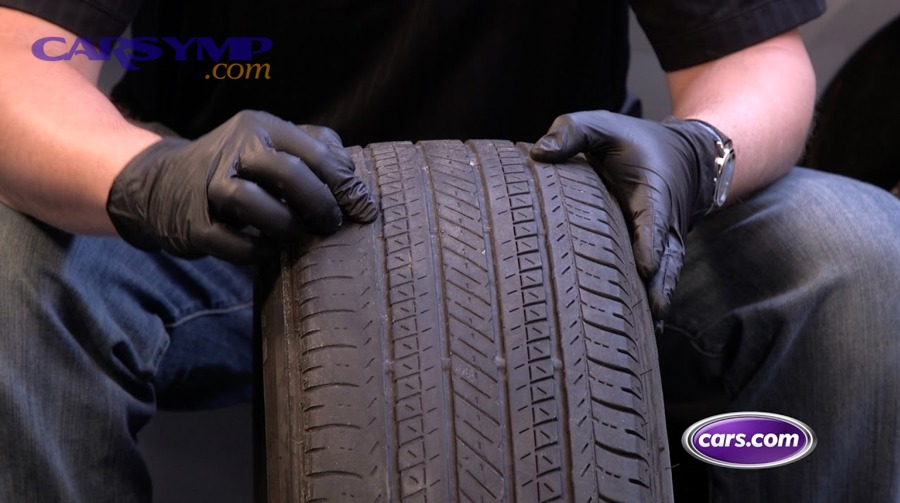
More importantly, the risks escalate non-linearly — a tire at 2/32″ does not merely perform “a little worse” than a tire at 4/32″. Below certain thresholds, grip loss becomes abrupt rather than gradual, particularly on wet or cold pavement.
How Does Worn Tread Depth Increase Stopping Distance in Wet Conditions?
Tread depth directly determines a tire’s ability to channel water away from the contact patch at speed. When tread grooves are too shallow, water cannot evacuate fast enough, creating a thin film between the rubber and the road surface — causing the tire to hydroplane and lose contact with the pavement entirely.
- At highway speed on a wet road, a tire at 2/32″ tread depth may require 100 or more additional feet to stop compared to the same tire with 4/32″ of tread. At 60 mph, that additional stopping distance is the difference between a safe stop and a collision.
- Hydroplaning can occur at speeds as low as 35 mph on standing water when tread depth is critically low. Drivers often mistake hydroplaning for a steering failure — the car drifts sideways with no response from the wheel — because the tires are literally floating on a water film rather than gripping the road.
- This is the core reason that safety experts and tire manufacturers set the “begin shopping” threshold at 4/32″ rather than the legal minimum of 2/32″. The last 2/32″ of tread life comes at an exponential cost in wet-weather grip.
How Should AWD, FWD, and RWD Drivers Approach Tire Replacement Differently?
AWD drivers must replace all four tires simultaneously to protect the drivetrain; FWD drivers should prioritize rotating tires frequently and replacing the front pair first; RWD drivers typically wear rear tires faster and should monitor rear tread depth more closely than front.
- AWD: The 4-tire simultaneous replacement rule is a mechanical requirement, not just a recommendation. Mismatched tread depths — even by as little as 4/32″ — can cause the center differential to work continuously against itself, leading to overheating and premature wear of expensive drivetrain components.
- FWD: Front tires carry the combined burden of steering, braking, and driving torque on front-wheel-drive vehicles, causing them to wear approximately 30 to 50 percent faster than rear tires. Regular rotation (every 5,000–7,500 miles) is the most effective mitigation strategy, and when replacement comes, the new tires should always go to the rear axle per USTMA guidelines.
- RWD: On rear-wheel-drive vehicles — common in trucks, sports cars, and luxury sedans — the rear tires bear all of the driving force. In performance driving contexts, rear tires can wear out in half the time of the fronts. RWD drivers should inspect rear tread depth monthly and not assume that because the front tires look good, the rears are equally fine.
When Choosing tire type: all-season vs performance vs winter tires also intersects with drivetrain type. AWD vehicles benefit greatly from winter tires on all four corners in cold climates; FWD vehicles running all-season tires in moderate winters may have adequate traction; and performance-oriented RWD vehicles in cold climates almost always require dedicated winter tires to maintain safe handling.
When Should You Replace Your Spare Tire — Even If It’s Never Been Used?
A spare tire should be replaced 10 years after its manufacture date regardless of whether it has ever been mounted or used, because the rubber compound ages at the same rate as a regular tire whether the tire is sitting in your trunk or rolling down the highway.
- Many drivers forget entirely that their spare tire exists until they need it — which is precisely the worst moment to discover that it is cracked, under-inflated, or structurally compromised from a decade of temperature cycling in a hot trunk.
- Full-size spare tires follow the same 10-year replacement rule as regular tires. Temporary spare tires (“donuts”) are rated for limited use — typically no more than 50 miles at speeds under 50 mph — and were not designed to handle highway speeds or extended driving under any circumstances.
- To check your spare tire’s age, locate its DOT code on the sidewall and read the last four digits using the same method as a regular tire. If your spare is approaching or past the 10-year mark, budget for its replacement along with your next set of regular tires.
- A Tire replacement cost estimate for a full-size spare is roughly $100 to $250 depending on tire size and brand — significantly less than the cost of being stranded on a highway with a flat tire and an unusable spare.
Does Tire Replacement Strategy Change Based on Your Driving Lifecycle or Ownership Plan?
Yes, a smarter tire replacement strategy accounts for how long you plan to keep your vehicle — timing your replacement so that you receive the full benefit of the new tires’ tread life rather than leaving unused tread value behind when you sell or trade in the car.
- A driver who keeps vehicles for four years and buys new tires at year one will likely need to replace them again at year three — giving them the benefit of fresh tires in the final year of ownership and making the vehicle more attractive at trade-in. A driver who waits until year three and replaces at year three gives themselves only one year on new tires — the same cost, but with less cumulative benefit.
- Planning tire replacement around major upcoming road trips, seasonal weather changes (especially the transition into winter), or a vehicle’s scheduled maintenance milestones helps drivers avoid the double inconvenience of a road trip on marginal tires and an unexpected replacement on a rushed timeline.
- When budgeting for tire replacement cost estimates, drivers should factor in not just the tire price but also installation, balancing, valve stems, and disposal fees — which typically add $15 to $30 per tire to the total cost. For a full set of mid-range all-season tires on a standard passenger vehicle, expect a total out-the-door cost of $400 to $900 depending on size, brand, and shop.
Tires are the one component of your vehicle that simultaneously determines your ability to accelerate, brake, steer, and survive an emergency. Every other safety system — from ABS to lane assist — operates through the contact patch of your tires. When those tires are worn beyond safe limits, degraded by age, or structurally damaged, no amount of advanced driver assistance technology can compensate. Checking your tread depth with a quarter, reading your DOT date code, and watching for bulges, cracks, and vibration are not optional maintenance habits — they are the most direct actions available to any driver who wants to control their safety on the road. Replace your tires when the signs say it’s time, not when a failure forces your hand.