


How to tell if caliper is leaking comes down to one thing: fresh brake fluid showing up where it should never be—around the caliper, hose connection, or inside the wheel—and the brake pedal or stopping feel changing soon after.
Next, many drivers also want to separate a true hydraulic leak from look-alikes such as grease, water, or road oil, because the wrong conclusion wastes time and can hide a real safety risk.
Beyond that, it helps to understand where calipers typically leak from, which symptoms match a leak (not just a noisy brake), and what quick checks can confirm the source without taking the whole brake apart.
To begin, we’ll move from the fastest “at-a-glance” proof to deeper checks; after that, we’ll connect the findings to the right fix so you can stop the leak instead of chasing it.
How to tell if caliper is leaking at the wheel in under two minutes?
A caliper leak is likely if you see fresh, oily brake fluid wetness on the caliper, the inner wheel, or the tire sidewall, especially when the reservoir level drops or braking feel changes. Next, use a simple wipe-and-recheck to confirm it’s active, not old residue.
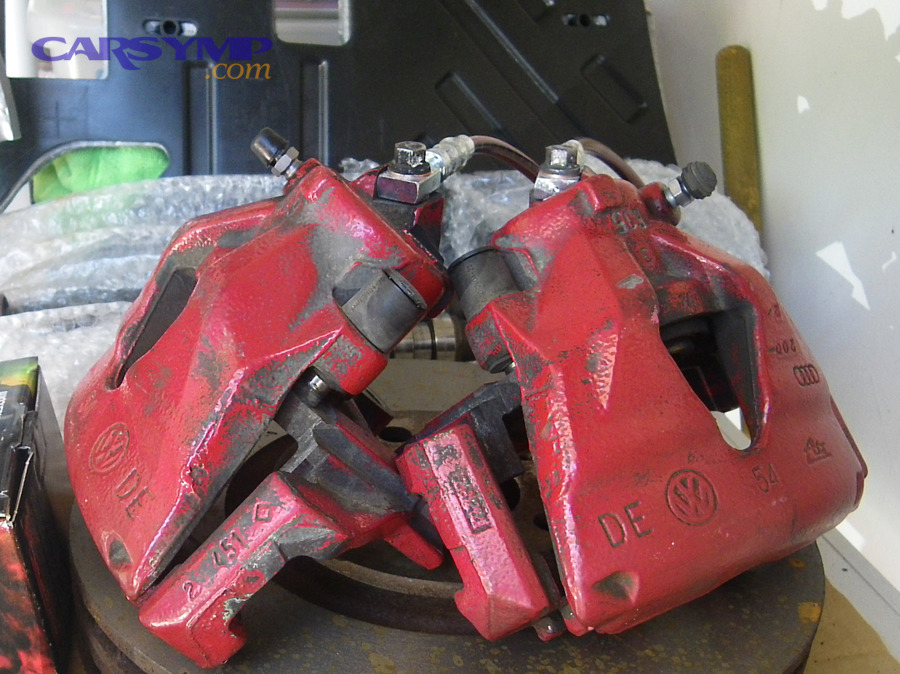
Start with safety: park on level ground, set the parking brake, and chock a wheel. Look through the spokes with a flashlight. A true leak usually shows as a glossy “wet” trail that collects dust into a dark paste, then continues downward by gravity.
Do a quick “three-zone” scan:
- Zone 1 (top/back of caliper): follow the brake hose to the caliper. Check the banjo bolt or hard-line fitting area for wet rings.
- Zone 2 (piston side near the pads/rotor): check for wetness at the dust boot edge or on the pad backing plate.
- Zone 3 (lowest point): look for a drip point on the caliper body, the splash shield, or the rim lip.
Then do the fastest confirmation: wipe the suspicious area with a clean white paper towel. Brake fluid typically leaves an oily, translucent stain and feels slick (not gritty) between fingers. If it’s truly active, it reappears after a short drive or after pressing the brake pedal several times while the car is stationary.
If you can safely observe with the wheel off, look for “fresh shine” around the bleeder screw and hose connection. After that, check the master cylinder reservoir: a leak often correlates with a level trending down over days rather than staying stable.
According to a safety defect report by the National Highway Traffic Safety Administration (NHTSA) from 08/2025, progressive brake fluid loss can increase pedal travel and reduce braking performance, which is why visible wetness paired with a changing pedal should be treated as urgent.
Is the wetness actually brake fluid, or a harmless look-alike?
Yes, you can differentiate brake fluid from water, oil, or grease by color, feel, smell, and how it behaves on paint and paper. Next, a simple spot test and location logic prevents misdiagnosis before you replace parts.
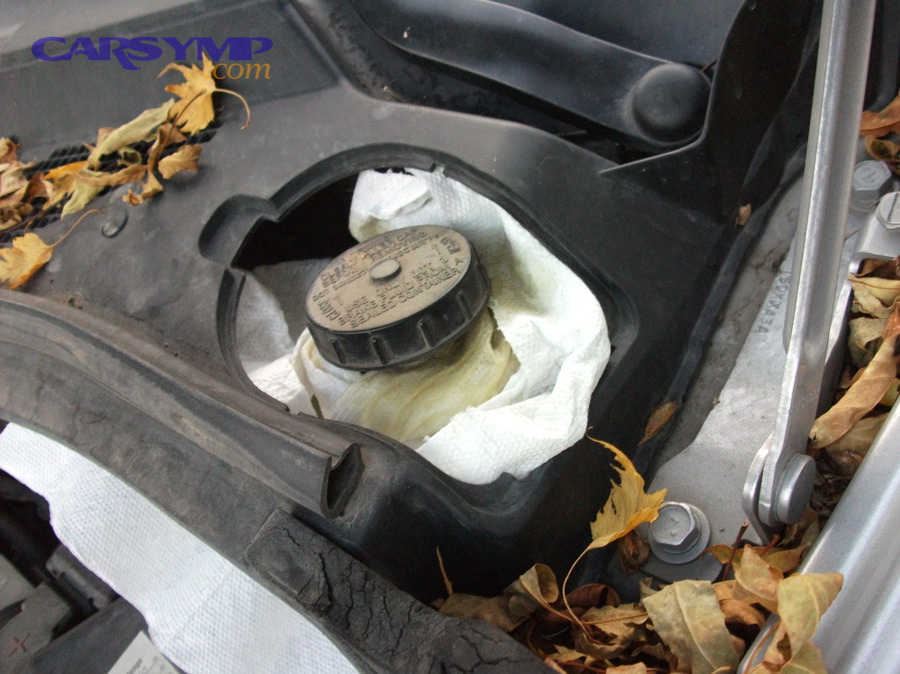
Color and feel: fresh brake fluid is usually clear to light amber; old fluid can look dark brown. It feels slick but not “stringy.” In contrast, CV joint grease is thick and sticky, often flung in radial streaks on the inner rim and suspension. Engine oil tends to be darker and may coat broader areas under airflow, not concentrated at the caliper.
Paper towel behavior: brake fluid spreads outward quickly on paper, leaving a translucent halo. Water evaporates and leaves little residue. Grease stays clumpy and doesn’t wick as evenly.
Paint reaction: brake fluid can soften or dull paint over time. If the wet area is directly below a spill point and the paint looks “lifted” or stained, that supports a brake fluid diagnosis. (Do not intentionally drip it on paint—use existing evidence.)
Location logic: brake fluid usually starts at a hydraulic joint (hose fitting, bleeder screw, piston seal area). Grease usually starts at a torn CV boot or a torn slide pin boot, and it spreads differently with wheel rotation.
If you’re unsure, follow the trail upward: the highest wet point is often the source. After that, take a quick photo before cleaning so you can compare “before vs after” and see what returns.
Where do brake calipers leak from most often?
Most caliper leaks come from four places: the hose connection, the bleeder screw area, the piston seal/dust boot region, or cracks/corrosion at the caliper body. Next, identifying the leak origin tells you whether tightening, sealing, or replacement is the correct path.
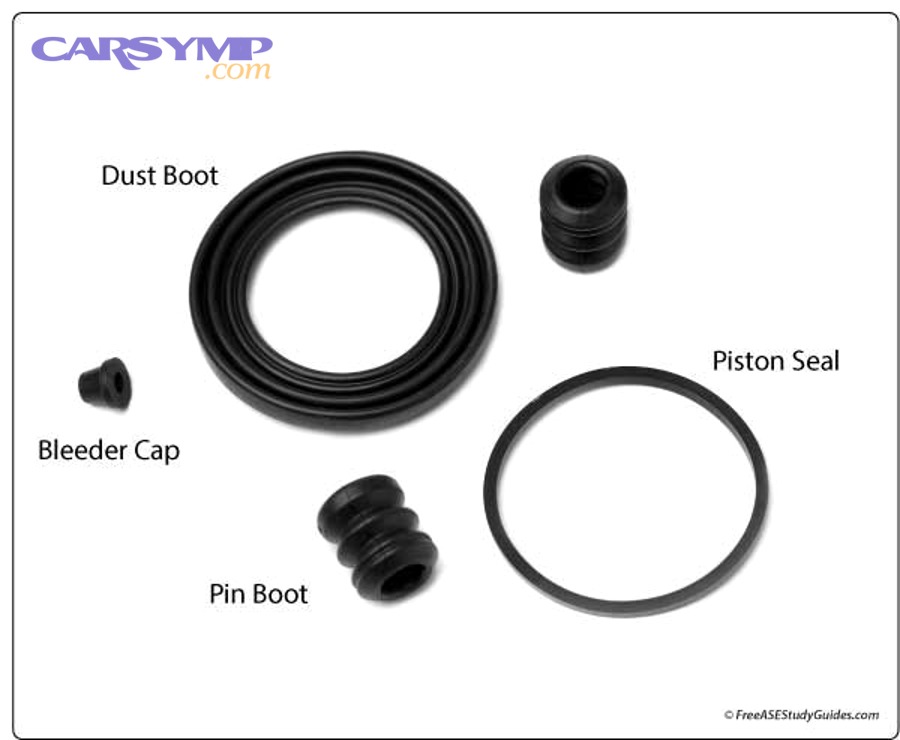
Think of a caliper as a pressurized container: any opening or seal can become a leak point. The most common leak origins include:
- Hose-to-caliper joint (banjo bolt or flare fitting): wetness forms a ring around the bolt head or fitting, then runs down the caliper.
- Bleeder screw seat: fluid appears near the bleeder threads or nipple, especially after service or if the screw is damaged.
- Piston seal region: fluid collects at the dust boot edge or inside the boot; it may wet the pads and rotor.
- Caliper body damage: rare, but cracks or severe corrosion can seep under pressure.
A useful clue is timing. If wetness appears right after any brake service, the hose connection or bleeder screw is a prime suspect. If it worsens over weeks and the dust boot looks torn or swollen, the piston seal area moves to the top of the list.
According to a study by Technical University of Liberec from the Department of Advanced Materials, in 04/2024, brake fluid can absorb about 1% water per year in service, and moisture contributes to internal corrosion that can accelerate seal and surface wear inside hydraulic brake components.
What visual clues prove the leak is at the piston seal, not “normal grime”?
A piston-seal leak is strongly indicated when the inside edge of the dust boot is wet with brake fluid, the pad backing plate shows oily contamination, or fluid tracks appear on the rotor hat and caliper throat. Next, inspecting the boot shape and the fluid pattern confirms whether it’s pressurized leakage.
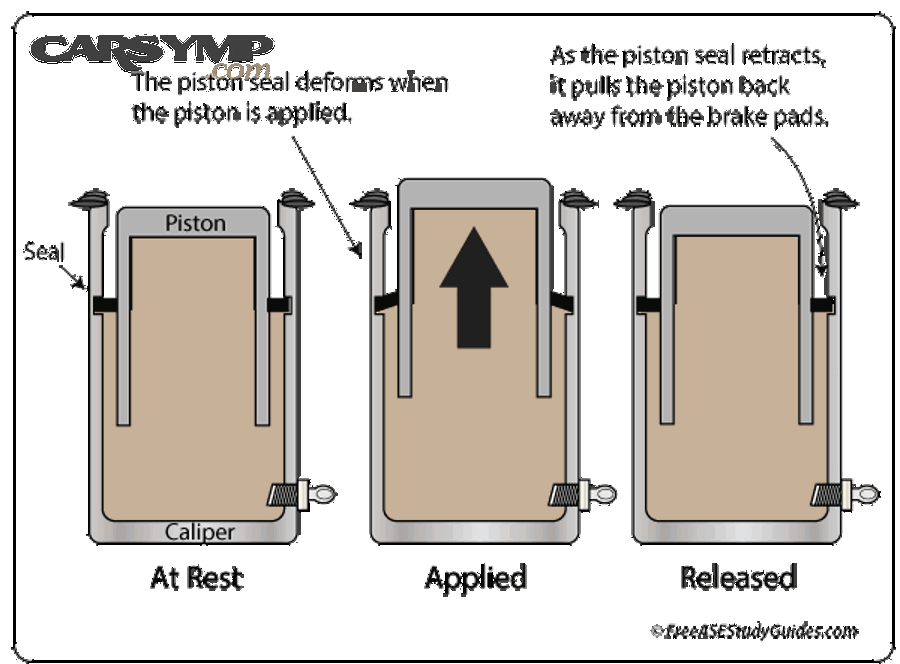
Boot wetness pattern: normal grime is dry and dusty; a leak looks glossy and may “creep” outward. If you gently pull the dust boot lip outward (without tearing it), and you see liquid inside the boot, that is a major red flag.
Pad/rotor contamination: brake fluid on pads can create uneven braking, noise, and reduced friction. You may see a darker, wet-looking patch on one pad compared to the opposite side on the same wheel.
Directional streaks: a piston leak often leaves a short vertical streak down the caliper body, then a drip line on the lower caliper edge. If the rim has wet spray only near one point and not radial “fanning,” it’s more consistent with seepage than fling from a rotating boot failure elsewhere.
However, don’t confuse piston leak with a sticking caliper that overheats. A sticking condition can discolor the rotor and create burnt odor without any fluid loss. That’s why the “wet + reservoir level trend” combination matters.
After you spot the pattern, the next move is to confirm activity: clean the area, perform a controlled pedal press test, then recheck for fresh wetness at the same boot edge.
Can a bleeder screw or fitting leak even if it looks “tight”?
Yes, a bleeder or fitting can leak even when snug if the sealing surfaces are damaged, contaminated, cross-threaded, or over-tightened and distorted. Next, focusing on the seat and washer surfaces—not just torque—prevents repeat leaks after you “tighten it again.”
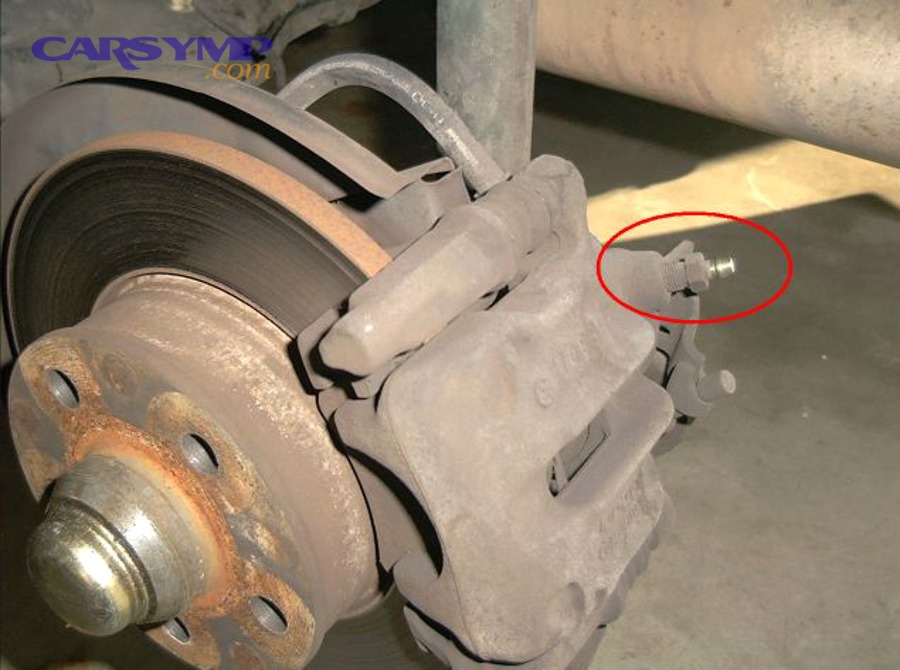
Bleeder screw leaks: the seal is made at the tapered seat, not the threads. If the taper is pitted, the caliper seat is scarred, or debris is trapped, fluid can seep around the taper. A cracked bleeder nipple or a rounded hex that was abused can also cause imperfect seating.
Banjo bolt leaks: the seal is made by crush washers on both sides of the banjo fitting. Reusing old washers, misaligning the hose, or having a nicked mating surface can lead to a slow weep that becomes obvious after several brake applications.
Flare fitting leaks: the flare must match the seat and be centered. A slightly crooked start can “feel tight” but still leak under pressure.
To verify, clean the area thoroughly, then wrap a dry paper towel around the suspected joint. Have a helper apply firm brake pedal pressure for 10–15 seconds (engine off is fine for the first test). If the towel shows fresh wetness at the joint, you’ve localized the leak.
Next, if wetness appears only after releasing the pedal, consider whether trapped pressure or restricted return flow is part of the story—because pressure can push fluid past marginal seats.
What driving symptoms match a caliper leak (and which do not)?
Common leak-linked symptoms include a sinking or spongy pedal, a brake warning light with low reservoir level, pulling during braking from uneven pressure, and fresh fluid smell near a wheel. Next, separating leak symptoms from heat/sticking symptoms keeps the diagnosis accurate.
Symptoms that fit a leak:
- Pedal travel increases over days: you need more pedal to stop, especially after the car sits.
- Reservoir level drops: you top it off and it gradually falls again.
- Pulling during braking: one side clamps less if pressure is lost at that wheel, making the car dart or drift under braking.
- Wet wheel/tire: visible fluid is the most direct symptom.
Symptoms that often get mistaken for leaks:
- Burning smell and very hot wheel: more typical of a sticking caliper or restricted hose, even without fluid loss.
- Squeal alone: can be pad wear indicators, glazing, or hardware issues.
- Vibration while braking: more commonly rotor thickness variation than a leak.
To connect symptoms to evidence, pair what you feel with what you see. For example, a pull plus a wet caliper strongly supports the leak hypothesis, while a hot wheel with no wetness points you toward a binding mechanism.
After that, you’re ready for a structured inspection that confirms the leak source without guessing.
How do you inspect a suspected caliper leak step-by-step without creating danger?
The safest inspection is a controlled process: secure the vehicle, clean the area, apply pedal pressure tests, and recheck for fresh wetness at known leak points. Next, using a repeatable sequence prevents missed evidence and reduces the risk of contamination.
Step 1: Prepare safely. Park on level ground, chock wheels, and use jack stands if lifting. Wear gloves and eye protection; brake fluid is irritating and can damage finishes.
Step 2: Document first. Take a clear photo of any wet area before cleaning. This gives you a baseline.
Step 3: Clean and reset the evidence. Use brake cleaner on the caliper exterior (avoid spraying directly into rubber boots aggressively). Wipe until dry.
Step 4: Static pressure test. With the engine off, have a helper press and hold the brake pedal firmly for 10–15 seconds. Watch the caliper joints and the piston boot edge. Fresh wetness that appears during the hold is strong proof of a hydraulic leak.
Step 5: Dynamic confirmation. If safe, do a short, low-speed roll in a driveway and apply the brakes a few times. Recheck the same points. Leaks sometimes show only after vibration and heat expand clearances.
Step 6: Reservoir trend check. Mark the reservoir level on the plastic with a non-permanent marker and recheck after a day or two of normal driving (or sooner if symptoms worsen).
To make the process even clearer, the following video demonstrates a practical bleeding workflow and how bleeder screws are used during service—use it for technique awareness, not as a substitute for finding the leak source first.
Next, if you confirm active leakage, avoid extended driving and move straight into severity assessment and repair planning.
Can a caliper leak be intermittent—only after braking or only when parked?
Yes, leaks can appear intermittent because pressure, temperature, and piston position change during and after braking, temporarily opening or sealing a marginal surface. Next, understanding the “when” helps you reproduce the leak and catch it before it becomes a sudden fluid loss.
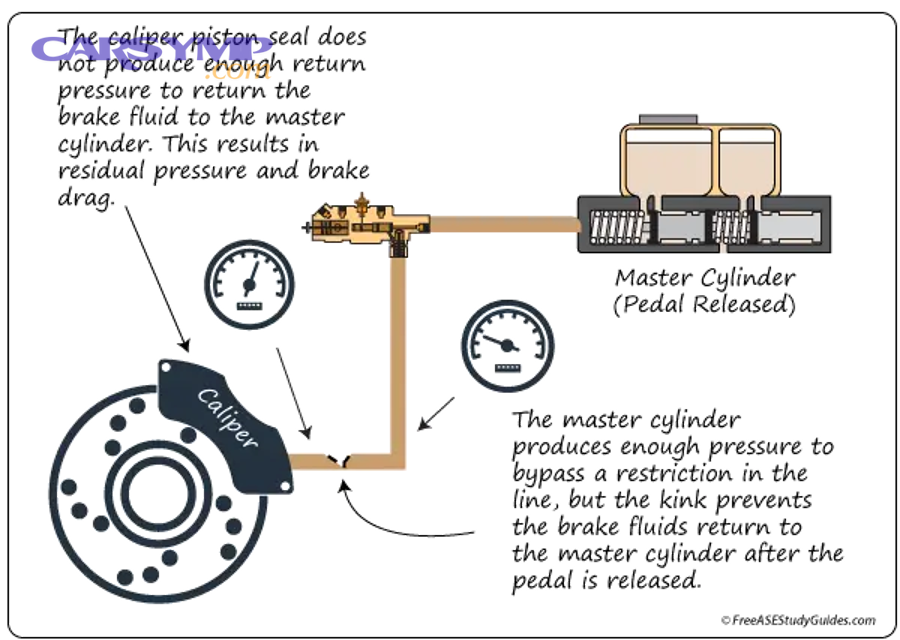
After braking (pressure-driven): a small nick at a washer, seat, or piston seal may only seep when hydraulic pressure is high. Once you release the pedal, the seep slows and looks “gone,” but it can still leave telltale wetness.
When parked (gravity-driven): fluid can slowly migrate down from a joint and form a drip on the lowest caliper edge, especially after a drive warms the fluid and thins it slightly. That’s why a puddle might appear overnight even if you didn’t see active dripping earlier.
Temperature effects: heat expands metal, softens rubber slightly, and changes fluid viscosity. A joint that’s marginal at operating temperature may leak more than when cold.
To capture intermittent leaks, do a “clean + heat cycle” test: clean the suspected points, drive 10–15 minutes with normal braking, then inspect immediately while the components are still warm. After that, inspect again after it sits for a few hours to see if gravity reveals a drip line.
How dangerous is it to drive with a suspected caliper leak?
Driving with a suspected caliper leak is unsafe because brake fluid loss can reduce hydraulic pressure and lead to longer stopping distances, unpredictable pull, or partial brake failure. Next, the key decision is whether you can move the car a short distance for repair or must tow immediately.
Tow it immediately if:
- The brake warning light is on and the reservoir is below minimum.
- The pedal sinks toward the floor or feels suddenly spongy.
- Fluid is visibly dripping or spraying onto the tire/rotor.
- The car pulls hard under braking or you hear grinding with poor stopping.
You might move it slowly (only if absolutely necessary) if:
- The reservoir is at a safe level and stable.
- The leak is only a light seep with no pedal change.
- You can travel a very short, low-speed route without traffic.
Even then, treat it as a risk decision, not a convenience. Brake fluid is the system’s pressure medium; losing it is not like losing washer fluid. Next, if you must move the vehicle, plan the route, avoid high speeds, and stop immediately if pedal feel changes.
What should you check before blaming the caliper as the source?
Before concluding the caliper is leaking, confirm the highest wet point, inspect the hose and hard line above it, and rule out spills from the reservoir area that travel downward. Next, this top-down verification prevents replacing the caliper when the real leak is a line or fitting upstream.
Check upstream first: follow the brake hose from the caliper to the bracket and hard line connection. A seep at the hard line flare can run down the hose and drip at the caliper, creating a false caliper “leak.”
Check the splash pattern: if fluid is on the suspension arm above the caliper, the source may be higher. If fluid is only on the caliper body and inner rim, the source is likely at the caliper or its immediate joint.
Check for service-related spills: overfilling the reservoir or a cap spill can send fluid down the firewall and frame rails, then appear near a wheel later. The giveaway is wide distribution across underbody surfaces rather than a focused trail.
Check for binding without leaking: a caliper that is sticking can cause heat and smell but may not leak. If you see no wetness and the reservoir is stable, shift attention toward movement and hardware condition.
After you validate the source, you can choose the right remedy—because “tighten it” is sometimes correct, but often the fix is a sealing surface or component replacement.
Contextual Border
From here, we shift from proving a leak to choosing the most durable fix, including decisions that prevent repeat failures and restore braking confidence.
What repairs actually stop caliper leaks and prevent the leak from coming back?
The correct repair depends on the leak origin: reseal the joint, replace damaged hardware, rebuild if the bore and piston are serviceable, or replace the caliper when corrosion, scoring, or repeated leakage makes sealing unreliable. Next, pairing the fix with proper cleaning and verification is what prevents comebacks.
When is a simple reseal or hardware fix enough?
If the leak is at a hose connection or bleeder seat and the caliper body is otherwise healthy, replacing crush washers, correcting alignment, cleaning the seat, and installing an undamaged bleeder can solve the problem. Next, re-test under pedal pressure to confirm a dry joint before road driving.
In practice, this often means new washers at the banjo fitting, ensuring mating surfaces are clean and flat, and using the correct tightening method. For a bleeder issue, the goal is a clean, undamaged taper that seats fully; threads alone do not seal.
When should you rebuild versus replace the caliper?
Rebuilding can work when the piston and bore are smooth and corrosion is minimal; replacement is safer when the bore is pitted, the piston is scored, or the caliper has a history of leaks. Next, think of rebuild as “seal renewal,” and replacement as “surface and seal renewal.”
If the piston seal area was leaking, a rebuild typically uses new seals and boots and careful cleaning of the seal groove. However, if rust has undermined the groove or bore, seals may fail again quickly. This is where full replacement often becomes the more durable choice.
In a real workflow, many owners choose brake caliper replacement when the leak is from the piston seal and the caliper shows heavy corrosion—because you’re restoring both hydraulic integrity and mechanical reliability in one step.
What else must be serviced so the “new” caliper doesn’t create new problems?
Any time caliper work is performed, you must ensure the caliper can move and clamp evenly by addressing guide mechanisms, boots, and contact surfaces. Next, ignoring movement hardware can cause dragging, uneven wear, and heat that shortens seal life.
This is where Slide pin service and lubrication matters: clean pins, inspect boots for tears, and use the correct high-temperature brake lubricant on the appropriate surfaces. If boots are torn, replace them; contamination in the pin bore can turn a healthy caliper into a sticking one.
How do you verify the system is safe after the leak is fixed?
After repairing the leak, you must restore hydraulic integrity by removing air, confirming a firm pedal, and checking for any fresh wetness under pressure. Next, verification is both a feel test and a visual test, because a pedal can feel “okay” while a slow seep continues.
This is the point where Brake bleeding after caliper replacement (or after any opened hydraulic joint) becomes essential. Use the correct fluid specification, keep the reservoir topped up, and watch for clear fluid with no bubbles. Then apply a firm pedal hold test and reinspect the repaired area for new wetness.
Finally, consider time and planning: Caliper replacement labor time varies by vehicle layout, rust level, and whether line fittings fight you, so a careful verification step is what protects the investment and the safety benefit.
Caliper leak questions drivers ask most
Most “caliper leak” questions come down to confirming the source, deciding whether it’s safe to drive, and choosing the most durable repair path. Next, these quick answers connect the earlier inspection steps to practical decisions you can make today.
Can a caliper leak contaminate brake pads?
Yes—if brake fluid reaches the pad friction surface, it can reduce friction and cause uneven braking; in many cases, contaminated pads should be replaced rather than “cleaned.” Next, confirm contamination by comparing the suspect pad to the opposite pad for wet sheen and odor.
Why is the inside of the wheel wet but the caliper looks only slightly damp?
Wheel rotation can spread a small seep into a larger pattern, making the rim look worse than the source. Next, find the highest wet point on the caliper or hose connection, clean it, then recheck after a short drive.
Is it normal for a caliper to look damp after rain?
Rainwater will look like clear droplets and will dry without leaving an oily stain; brake fluid remains slick and collects dirt into a dark film. Next, use the paper towel wick test to separate water from fluid.
What if the brake pedal feels fine but I see wetness?
A small leak can exist before the pedal changes, especially if the reservoir level is still adequate. Next, treat visible wetness as an early warning: confirm it’s brake fluid, locate the source, and plan repair before it becomes a pressure-loss event.
How do I avoid misdiagnosing a sticking caliper as a leaking caliper?
Sticking usually shows heat, odor, uneven pad wear, and sometimes rotor discoloration without reservoir loss; leaking shows wetness and often a level trend down. Next, use both symptom sets together—feel plus visual proof—to choose the correct fix.
Where should I mention this issue in my maintenance notes?
Record the wheel position, the exact wet area (hose joint, bleeder, piston boot), the reservoir level trend, and what changed after cleaning and rechecking. Next, these details help any technician confirm the diagnosis quickly and prevent repeat visits.
In deeper diagnostics and write-ups, you can keep your notes organized under your own system name such as Car Symp, so patterns like “wetness returns after pedal hold” or “seep only when warm” stay consistent across future brake inspections.