


A typical valve cover gasket replacement cost estimate for car owners usually falls in the mid-hundreds, but the real number depends on labor access, engine layout, and whether the repair includes one cover or multiple sealing components. Current pricing references show a broad mainstream range, with RepairPal listing an average total of $336 to $461 for many vehicles, while J.D. Power notes some simpler jobs can be lower and more complex jobs can rise well beyond entry-level estimates.
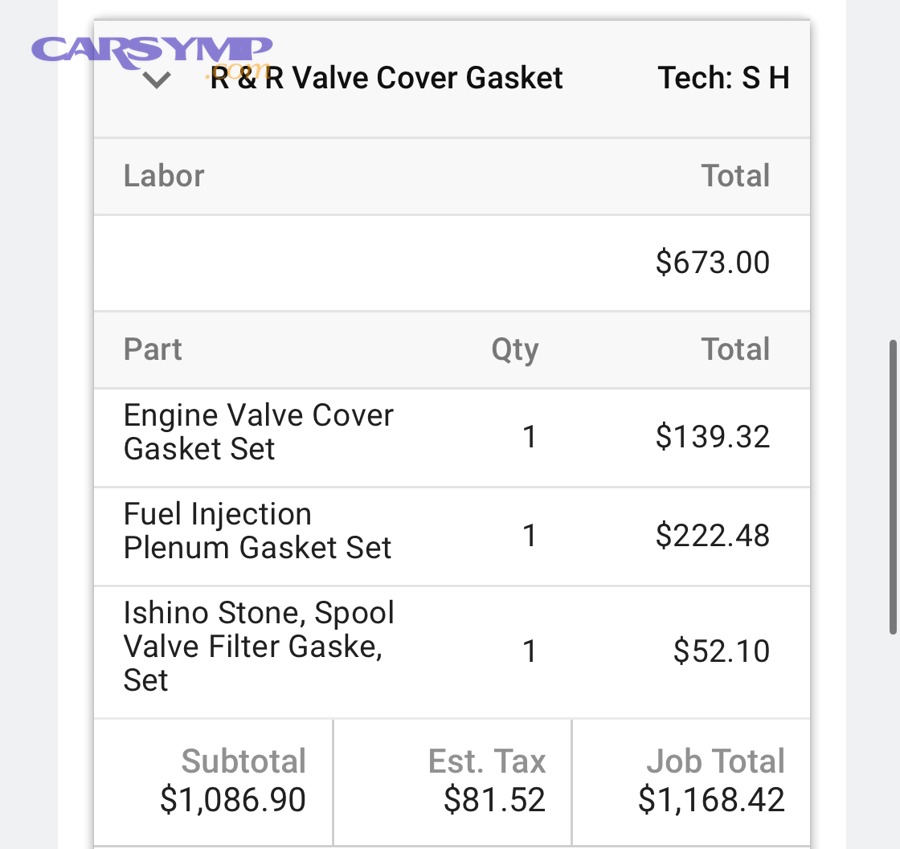
That baseline estimate becomes more useful when you separate labor from parts. The gasket itself is often one of the cheaper pieces in the job, but the time required to remove coils, hoses, brackets, intake components, or a hard-to-reach rear bank is what usually moves the final bill upward. RepairPal’s current estimate shows labor at $254 to $373 versus parts at $82 to $87 for the average case, which makes the labor-versus-parts split central to buyer intent.
Vehicle design also changes the estimate more than many drivers expect. A small inline-four with open top-end access is usually easier and cheaper to seal than a tightly packaged V6 or V8, especially when the rear valve cover sits near the firewall. Model-level RepairPal pages show that difference clearly, with a Ford Focus estimate at $216 to $299 and a Ford Explorer estimate at $526 to $735.
Related oil leak repairs matter as well because a quote often includes more than the perimeter gasket alone. Spark plug tube seals, grommets, cleaning time, and diagnosis of nearby oil leaks can increase the invoice. Introduce a new idea: once you understand the base cost, the next step is learning how to judge what is actually included, what makes one quote fairer than another, and when extra work is worth doing at the same time.
What Is the Typical Valve Cover Gasket Replacement Cost for Car Owners?
A typical valve cover gasket replacement cost for car owners is usually a mid-range repair, with many estimates landing around a few hundred dollars because labor, not the gasket itself, drives the price.
To better understand that estimate, it helps to separate the “headline number” from the real variables that shape what your car will actually cost.
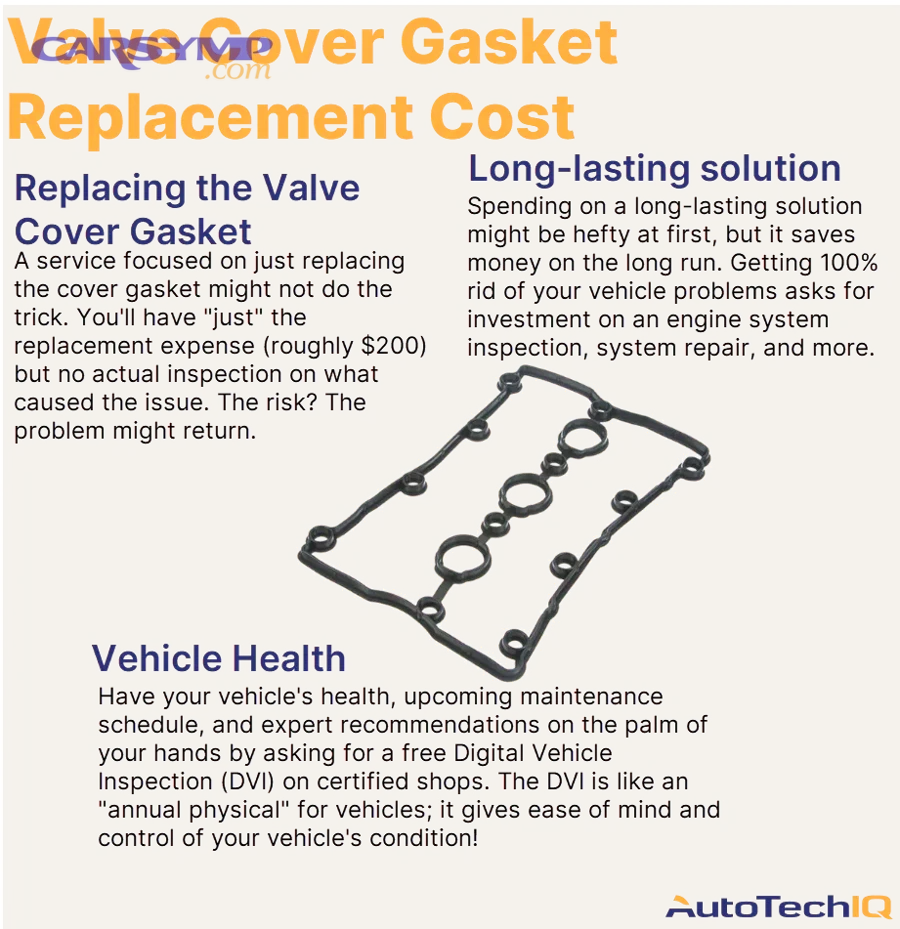
Is Valve Cover Gasket Replacement Usually an Expensive Repair?
No, valve cover gasket replacement is not usually one of the most expensive engine repairs, because the part is relatively inexpensive, the job is commonly performed without opening the lower engine, and most of the cost comes from labor rather than major hard parts.
However, “not the most expensive” does not mean “cheap in every case.” For many car owners, this repair feels expensive when the gasket itself costs a small fraction of the total invoice. That happens because the technician must often remove ignition coils, wiring retainers, covers, breather hoses, and sometimes intake-related components before the gasket can be replaced correctly. On a simple inline engine, that access may be straightforward. On a transverse V6 or a crowded SUV engine bay, the same job can take much longer.
This difference explains why general averages are useful only as a starting point. RepairPal currently lists the average total cost at $336 to $461, while J.D. Power notes that some vehicles can be closer to $110 to $340 when access is easier and the job is simpler. That gap is not a contradiction. It shows that “typical” depends heavily on the vehicle, local labor rate, and whether the quote includes only the gasket or a more complete sealing service.
For car owners, the practical takeaway is simple: this repair sits in the middle ground. It is not usually catastrophic like major internal engine work, but it is not small enough to approve blindly. The right way to think about the cost is as a labor-sensitive oil leak repair that becomes more expensive when the engine design adds time.
What Does a Valve Cover Gasket Replacement Cost Estimate Include?
A valve cover gasket replacement cost estimate usually includes labor, the gasket set, and sometimes small related seals, but it often excludes taxes, shop fees, and additional repairs discovered during diagnosis.
More specifically, the estimate should answer four questions: what part is being replaced, how many labor hours are expected, whether related sealing items are included, and whether the technician expects extra cleaning or diagnosis time. A basic quote may cover only the perimeter gasket. A better quote may also include spark plug tube seals, bolt grommets, or sealant at specific corners if the manufacturer’s procedure requires it.
This is where many car owners get confused. Two shops may both say “valve cover gasket replacement,” yet one may be pricing only the minimum gasket job while another is pricing a more complete service that reduces the chance of repeat leaks. RepairPal explicitly notes that its range does not include taxes and fees and that related repairs may also be needed. CarParts similarly points out that labor cost, gasket condition, and the new part’s price all influence the final number.
A strong estimate should therefore state whether the shop plans to clean mating surfaces, replace integrated tube seals, inspect the PCV path if oil seepage suggests pressure issues, and address contamination around the ignition area. That detail is what turns a generic price into a usable repair decision.
According to current RepairPal estimator data published on January 28, 2026, the average cost for a valve cover gasket replacement is $336 to $461, with labor at $254 to $373 and parts at $82 to $87.
What Parts and Labor Make Up the Final Replacement Price?
The final replacement price is made up primarily of labor time, the gasket set, and any related sealing or cleaning items needed to stop the leak correctly the first time.
Then, once the major cost buckets are visible, it becomes much easier to see why one quote can be double another even when both mention the same repair.
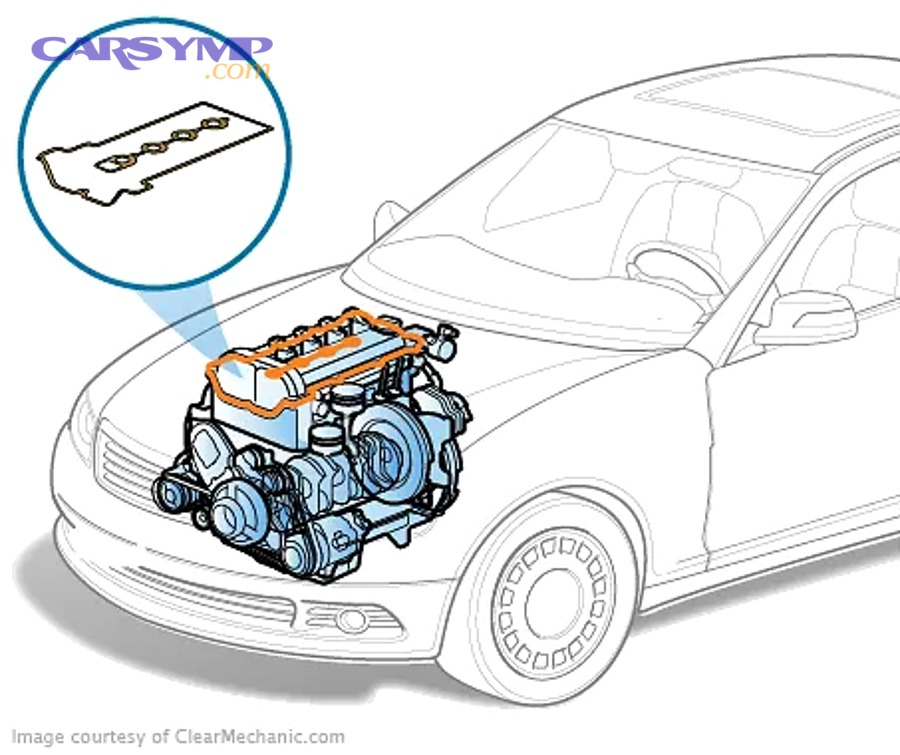
Which Cost Components Are Usually Included in the Job?
There are several main cost components in this job: labor, the valve cover gasket set, possible spark plug tube seals or grommets, cleaning supplies, and any access-related disassembly required by the engine layout.
Specifically, labor is the largest category because the technician must reach the cover, remove it without damaging surrounding parts, clean the sealing surfaces, install the new gasket correctly, and torque everything in sequence. The parts category often looks small by comparison, especially on mainstream vehicles where the gasket itself is inexpensive. CarParts reports a replacement valve cover gasket can range from $12 to $124 depending on the vehicle, while J.D. Power says the gasket itself commonly costs around $10 to $40.
The less obvious cost component is “access.” Even before the actual sealing work begins, the technician may need to remove ignition coils, intake ducting, decorative covers, brackets, or vacuum lines. On some engines, the rear bank may require substantially more work than the front. That is why the same repair name can hide very different labor times.
Another often-overlooked item is cleanup. If oil has pooled around the valve cover edge, spark plug wells, or ignition components, the shop may need extra time to clean the area. This matters because oil residue can keep producing smell or smoke after the leak is fixed if the contaminated surfaces are left dirty. That is one reason “Cleaning oil from ignition coils after leak” is not just cosmetic; it can be part of a proper finish to the repair.
How Does Labor Cost Compare With Parts Cost for This Repair?
Labor usually costs much more than parts for this repair, while parts become more influential only when the engine uses a larger gasket set or bundled sealing components.
For example, RepairPal’s average estimate shows labor at $254 to $373 and parts at $82 to $87, which clearly makes labor the dominant cost bucket in many real-world repairs. CarParts shows an even wider labor range of $60 to $543, reinforcing that labor swings much more dramatically by vehicle than the price of the gasket itself.
That cost structure changes how car owners should read a quote. If parts look high but labor is modest, the shop may be using an OEM kit or including tube seals and hardware. If labor is high and parts are ordinary, the engine may simply be difficult to access. Either can be legitimate, but they point to different reasons for the total.
A useful rule of thumb is this: the gasket is the repair item, but labor is the pricing engine. That is why articles and estimators consistently frame valve cover gasket replacement as a labor-sensitive service rather than a parts-heavy one. This also explains why DIY-minded owners often focus on access difficulty first, not gasket price first, when deciding whether the job is realistic.
According to J.D. Power’s cost guide, the gasket itself typically costs $10 to $40, while overall replacement commonly ranges from $110 to $340, with labor being the main factor behind the increase.
Which Vehicles and Engine Designs Make Valve Cover Gasket Replacement Cost More?
Vehicles with tighter engine bays, V-type layouts, rear-bank access issues, or extra intake removal usually make valve cover gasket replacement cost more than simple inline-engine layouts.
To better understand why, it helps to compare vehicle design rather than just brand name, because packaging often matters more than badge.
What Factors Raise or Lower the Estimate by Vehicle?
There are several main factors that raise or lower the estimate by vehicle: engine configuration, access space, number of valve covers, local labor rate, and whether related parts must be removed first.
An inline-four often has one accessible cover and fewer surrounding obstacles. A V6 or V8 may have two covers, with one bank buried against the firewall. A crossover or minivan with a transverse engine can add another layer of difficulty because the rear bank is hard to reach. If intake manifold removal is required, labor rises quickly because the repair now includes more disassembly and more reassembly care.
RepairPal’s model-level data shows how dramatic that difference can be. A Ford Focus is currently estimated at $216 to $299, while a Ford Explorer is estimated at $526 to $735. A Ford Fusion sits at $233 to $320, while a Chevrolet Malibu comes in at $482 to $691. Those examples show that the repair name stays the same, but the engine bay changes the labor story.
Car owners should also remember that geography matters. A shop in a higher labor-rate market may price the same job much higher than a shop in a lower-rate region. That does not automatically make the higher quote unfair; it may reflect local shop economics.
How Does an Easy Inline Engine Compare With a Hard-to-Reach V6 or V8?
An easy inline engine usually wins on lower labor time, while a hard-to-reach V6 or V8 is more likely to produce a higher estimate because access is slower and the technician may need to work around multiple covers or a rear bank.
However, the difference is not just about cylinder count. It is about service path. On an inline engine, the technician may see the cover immediately after removing a few top-side parts. On a V engine, the rear bank can be hidden under intake plumbing, cowl interference, or wiring that takes time to move safely. That time becomes billable labor.
This is also where Valve cover gasket leak symptoms matter in the estimate process. Oil around the upper engine, a burned-oil smell, smoke from oil hitting hot surfaces, or oil in spark plug wells can all point toward the need for upper-engine sealing work. But on a hard-to-reach engine, confirming the exact leak source may also take longer because visibility is worse and nearby leaks can mimic each other. NAPA notes that visible oil streaks and even a low-oil warning can appear when the gasket leak becomes severe enough.
For owners comparing quotes, the better question is not “why is this V6 quote higher than my friend’s small sedan?” The better question is “what access steps make this engine slower?” That question gets you closer to the real cost driver.
According to current RepairPal model estimates, a Ford Focus valve cover gasket replacement is $216 to $299, while a Ford Explorer is $526 to $735, illustrating how engine and vehicle design can materially change the price.
Do Related Oil Leak Repairs Change the Total Repair Bill?
Yes, related oil leak repairs can change the total repair bill because the technician may need to replace adjacent seals, clean contaminated parts, or confirm that the valve cover gasket is truly the main leak source.
In addition, related work can either increase the invoice or improve value, depending on whether it prevents duplicate labor later.
Which Related Repairs Are Commonly Found With a Valve Cover Gasket Leak?
There are several related repairs commonly found with a valve cover gasket leak: spark plug tube seals, grommets, contaminated ignition components, cleaning of leaked oil, and diagnosis of nearby upper-engine leak sources.
Specifically, many leaks that appear to come from the perimeter gasket may also involve tube seals that allow oil into spark plug wells. When that happens, oil can coat the coil boots and plug area, which is why Cleaning oil from ignition coils after leak is part of a complete repair mindset rather than an optional finishing touch. Residual oil can continue to smell, smoke, or interfere with a clean inspection after the gasket has already been replaced.
There is also a diagnostic side to this. Oil on the outside of the engine can travel, making a valve cover leak look worse or making another upper-engine leak look like a valve cover issue. A careful technician may recommend cleaning the area, rechecking after diagnosis, and replacing only the needed components. That can slightly raise the estimate upfront, but it can also prevent misdirected spending.
The phrase valve cover gasket replacement should therefore be read as a repair family, not always a single-part swap. If the leak has reached plug wells, coil areas, or hot exhaust surfaces, related labor may be justified because the job is no longer only about changing the rubber seal.
Is It Cheaper to Combine Related Oil Leak Repairs in One Visit?
Yes, it is often cheaper to combine related oil leak repairs in one visit because labor overlaps, teardown happens once, and the technician can clean and reassemble the upper engine more efficiently.
More importantly, combining work reduces duplicate access charges. If the technician already has coils, covers, and nearby components removed, adding related tube seals or closely connected upper-engine items may cost less than doing a second appointment later. That does not mean you should automatically approve every upsell. It means you should ask whether the added repair shares the same labor path.
This principle also helps explain why some quotes look high at first glance. A shop may be pricing the gasket job together with tube seals, cleaning, and leak verification rather than pricing only the narrowest possible fix. In many cases, that bundled quote is more economical than paying separate diagnosis and labor charges twice.
For owners seeing oil near ignition components, this is also the point where DIY valve cover gasket replacement steps need to be realistic. Replacing the gasket without thoroughly cleaning contaminated areas or checking the plug wells can leave behind symptoms that make the repair feel unsuccessful, even when the gasket itself was installed correctly.
According to RepairPal’s estimator notes, related repairs may also be needed in addition to the listed valve cover gasket replacement price, which confirms that the published base range does not always represent the entire final invoice.
How Can Car Owners Tell Whether a Repair Quote Is Fair?
Car owners can tell whether a repair quote is fair by comparing labor hours, parts quality, included sealing items, diagnosis detail, and whether the estimate matches the vehicle’s actual access difficulty.
Below that fair-price question, the real goal is not finding the lowest number; it is finding the clearest and most complete number for the work your engine actually needs.
What Should Car Owners Compare Before Approving the Repair?
There are several main things car owners should compare before approving the repair: labor time, parts brand, included seals, cleanup steps, warranty terms, and whether the estimate explains the leak source clearly.
Start with labor. Ask how difficult the engine access is and whether the quote covers one bank or both. Then look at parts quality. An OEM gasket set may cost more than an aftermarket one, but the difference is only meaningful when it is paired with a clear installation scope. Next, ask whether the estimate includes spark plug tube seals, grommets, and any sealant required by the factory procedure. A quote that omits these details can look cheaper without being more complete.
You should also compare the diagnostic quality. A fair quote identifies why the shop believes the valve cover is leaking and whether another source may be contributing. If the engine has heavy oil residue, ask whether cleaning is included. Without that step, leftover oil can keep dripping or smoking and make the successful repair harder to verify.
Finally, compare warranty and documentation. A higher quote can still be fair if it includes better parts, better leak-source confirmation, and a stronger workmanship warranty. The best estimate is usually the one that lets you understand exactly what you are buying.
How Does a Dealer Quote Compare With an Independent Shop Estimate?
A dealer quote often wins on OEM familiarity and factory parts access, while an independent shop is often better for lower installed cost and flexible parts options, and either can be fair if the scope is clearly defined.
However, the useful comparison is scope-to-price, not dealer-versus-independent in the abstract. A dealer may price the job higher because its labor rate is higher and its parts sourcing skews OEM. An independent shop may come in lower while still doing excellent work, especially if the technician knows the platform well and uses a reputable gasket set. The risk comes when comparing quotes that are not equally detailed.
This is why car owners should request side-by-side clarity: number of labor hours, parts brand, whether both perimeter and tube seals are included, and whether the quote covers cleaning or diagnosis. Once those line items match, the price comparison becomes much more meaningful.
The phrase “fair quote” should therefore mean “transparent and appropriate for the engine,” not simply “the lowest total.” For a labor-sensitive repair, clarity beats sticker shock.
According to current RepairPal model data, mainstream vehicles can vary from the low $200s into the $700 range depending on the model and labor involved, which is why quote fairness has to be judged against vehicle-specific complexity rather than a single universal price.
What Less-Obvious Factors Can Change a Valve Cover Gasket Estimate?
Less-obvious factors that can change a valve cover gasket estimate include bundled tube seals, mileage-related condition, DIY feasibility, and labor overlap with other upper-engine repairs.
Besides the obvious gasket and labor line items, these hidden variables are often what make one estimate feel unexpectedly high or surprisingly reasonable.
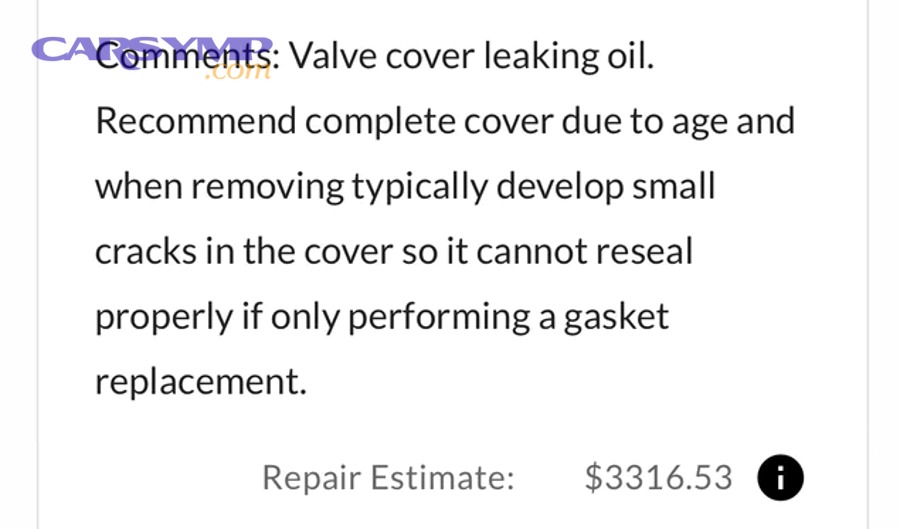
Can Replacing Spark Plug Tube Seals or Grommets Change the Final Price?
Yes, replacing spark plug tube seals or grommets can change the final price because they add parts and installation scope, but they can also improve the value of the repair by preventing repeat oil contamination.
More specifically, these components matter when the leak reaches the spark plug wells or when the engine’s design integrates multiple sealing points into the same service event. Adding them may raise the estimate modestly, but leaving them out can create a false economy if oil returns around the ignition system soon after the job.
This is why Cleaning oil from ignition coils after leak belongs in the same discussion. When oil has entered the plug well area, a complete repair often means replacing the failed sealing elements and removing contamination so the ignition system can be rechecked cleanly afterward.
Does High Mileage Make Valve Cover Gasket Replacement More Worth Doing?
Yes, high mileage can make valve cover gasket replacement more worth doing because aging rubber hardens, leak risk rises, and preventing oil loss or ignition contamination becomes more valuable as the vehicle accumulates use.
However, mileage alone is not the decision point. What matters more is symptom severity and vehicle condition. If the car shows valve cover gasket leak symptoms such as a burned-oil smell, fresh seepage down the valve cover edge, oil in spark plug wells, or visible smoke from oil contacting hot components, the repair becomes easier to justify. Waiting can turn a moderate leak into a messier cleanup problem.
On the other hand, a very minor seep with no smell, no oil-level impact, and no contamination may justify scheduling the repair rather than treating it as an emergency. The cost decision becomes stronger when the leak threatens ignition components or creates repeat odor complaints.
Is DIY Valve Cover Gasket Replacement Cheaper Than Paying a Shop?
Yes, DIY valve cover gasket replacement is usually cheaper in direct cash terms, but it is only cheaper overall when the owner can follow the correct access, cleaning, torque, and reassembly process without causing new leaks or ignition issues.
That is the key difference between saving money and creating a comeback repair. The direct part cost for a gasket can be modest, which is why many owners are tempted to handle the job themselves. J.D. Power says the gasket itself often costs $10 to $40, and CarParts lists a broader $12 to $124 range depending on vehicle.
The real question is whether the engine layout is beginner-friendly. DIY valve cover gasket replacement steps can be manageable on an easy inline engine with open access, clear torque specs, and minimal surrounding hardware. They become much riskier on hard-to-reach V engines, engines with brittle connectors, or applications where the rear bank demands patience and exact reassembly.
A successful DIY job usually requires four habits: label removed parts, clean mating surfaces carefully without gouging them, install the gasket in the correct channel orientation, and torque fasteners evenly to specification. Skipping any of those can produce a leak that looks like a bad part when the real problem is installation error.
Can Combining This Job With Other Upper-Engine Repairs Save Money?
Yes, combining this job with other upper-engine repairs can save money because shared disassembly reduces duplicate labor and lets the technician handle related sealing or access-dependent tasks in one session.
For example, if the intake path, ignition components, or nearby upper-engine service items must already be removed to reach the cover, doing them together can improve labor efficiency. This does not mean adding unrelated work. It means looking for overlap. If a second repair uses the same access path, bundling it can make financial sense.
This is especially relevant on more complex engines where labor dominates the estimate. In those cases, the smartest budgeting move is often not chasing the absolute lowest single-repair quote, but choosing the right grouped repair plan. That is how car owners turn a necessary oil leak repair into a more efficient maintenance event.
According to CarParts’ March 12, 2025 cost guide, labor for valve cover gasket replacement can range from $60 to $543 depending on vehicle model, which helps explain why combining overlapping upper-engine work can materially change the value of a quote.
In short, a valve cover gasket replacement cost estimate is most useful when it is treated as a labor-shaped upper-engine sealing job rather than a simple parts purchase. The best estimate explains the labor path, names the included sealing items, accounts for related oil cleanup, and reflects the real complexity of your engine rather than an average number borrowed from another car.