Daniel James Carter
Lead Diagnostic Technician & Technical Content Author
Company / Organization
CarSymp
Experience / Skills
Check Engine Light diagnosis (OBD-II); engine performance & ignition/fuel systems; brake service; steering & suspension; AC/heater diagnostics; cooling system service; basic transmission diagnostics; electrical & battery/charging systems; maintenance schedules
About Daniel James Carter
Daniel James Carter (born July 14, 1988) is an Automotive Diagnostic & Repair Technician and the Lead Diagnostic Technician & Technical Content Author for this auto repair website. His work focuses on translating real shop-floor diagnostics into clear, step-by-step guidance for vehicle owners—especially around check-engine issues, climate control problems, brake safety, and steering/suspension wear.\n\nDaniel’s interest in mechanical systems started early, but his professional path became formal in 2006 when he began a structured apprenticeship in general automotive service. Between 2006 and 2008, he worked alongside senior technicians learning foundational skills—oil services, brake inspections, tire work, basic electrical checks, and service documentation. During this period, he also built the habits that still define his process today: verifying the customer’s concern, road-testing when safe, and confirming repairs with repeatable measurements.\n\nIn 2009, Daniel moved into a full-time automotive service technician role, where he handled a higher volume of maintenance and repair work (brakes, cooling systems, belts, ignition components, and driveline basics). By 2012, he shifted toward diagnostics, focusing on OBD-II fault tracing, fuel trim interpretation, misfire detection, smoke-testing intake leaks, and electrical circuit testing using wiring diagrams and voltage-drop methods.\n\nA major milestone came in 2015 when he began pursuing advanced professional credentials through the National Institute for Automotive Service Excellence (ASE). After completing multiple ASE exams and documenting the required hands-on experience, Daniel earned the ASE Master Automobile Technician designation in 2017. He continued building depth in drivability and emissions-related diagnostics and achieved the ASE L1 Advanced Engine Performance Specialist credential in 2019. He maintains his credentialing through ongoing study and periodic recertification, aligning his knowledge with modern engine management systems, updated scan-tool workflows, and evolving diagnostic standards.\n\nFrom 2018 to 2021, Daniel served as a senior technician in a busy service environment where his day-to-day work centered on complex complaints: intermittent stalling, hard starts, rough idle, overheating, vibration under braking, and AC systems that blow warm or smell musty. He became known for careful diagnosis before parts replacement, using a consistent checklist:\n\n\n Confirm the symptom and capture freeze-frame data.\n Test likely causes (air leaks, sensors, ignition, fuel delivery, charging system) with measurable evidence.\n Repair only after the failure is verified and the fix can be validated.\n Validate with a road test, live data review, and final inspection.\n\n\nIn 2022, Daniel began formalizing his field notes into consumer-friendly write-ups and troubleshooting guides. By 2023, he expanded that work into structured content for this website, combining real repair patterns with clear explanations of why failures happen (for example: how moisture and organic buildup can cause musty AC smell, why worn suspension joints can mimic wheel balance issues, or how vacuum leaks and weak ignition coils can trigger persistent misfires).\n\nToday, Daniel’s role on the website is to ensure every guide reflects practical repair reality—tools a shop actually uses, common misdiagnoses to avoid, and safety-first recommendations. He writes with the same standard he uses in the bay: the diagnosis must make sense, the repair must be verifiable, and the timeline from symptom to fix must be clear for the reader.

Related topics
Latest posts by Daniel James Carter


Assess DIY Ball Joint DIY Replacement Risks for Home Mechanics: Hazards vs Safeguards
DIY work on front suspension can be rewarding, but it becomes high-stakes when a single fastener, boot, or taper fit is mishandled. Many people start because they want to save labor cost and learn the job, yet they underestimate the tool forces, rust variables, and geometry checks involved.
Daniel James Carter January 18, 2026 at 7:56 PM
Diagnose Squeaking or Clunking Front-End Causes for Drivers: Squeak vs Clunk
Squeaking or clunking front end causes usually come from parts that move under load—suspension joints, rubber bushings, steering links, brakes, or even a wheel/tire issue that “talks” when weight shifts. The fastest path to an answer is matching the sound to the moment it happens: braking, turning, bumps, or steady cruising.
Daniel James Carter January 18, 2026 at 7:47 PM
Estimate Ball Joint Replacement Cost for Drivers: OEM vs Aftermarket
A reliable Ball joint replacement cost estimate usually lands in the “few hundred dollars” range per joint, but the final number depends on how your suspension is built, how difficult the joint is to access, and what else needs attention at the same time. To plan a realistic budget, you need to separate the quote into parts , labor , and add-on services (especially alignment), then match those line items to your car’s design and your local labor rates.
Daniel James Carter January 18, 2026 at 7:39 PM
Confirm Alignment After Ball Joint Service for Drivers: Toe vs Camber
Yes—an alignment is usually needed after ball joint service , because the joint sits at a key pivot point that influences how the wheel points and how the tire contacts the road. Beyond the simple yes/no, drivers often want to know when to schedule alignment, how far they can safely drive before the appointment, and which angles actually matter for tire wear and steering feel.
Daniel James Carter January 18, 2026 at 7:30 PM
Compare Press-In vs Bolt-On Ball Joints for DIYers: Fit vs Fasteners
Press-in vs bolt-on ball joint differences come down to how the joint is retained in the suspension, which directly affects serviceability, failure modes, and what “doing it right” actually looks like in your driveway. Next, you’ll see how each design handles load paths, tolerances, and real-world wear so you can predict what will fail first and why—before you spend money or time.
Daniel James Carter January 18, 2026 at 7:24 PM
Estimate Labor Time to Replace a Ball Joint: DIY vs Shop
Labor time to replace a ball joint is usually measured in hours, and the “right” estimate depends less on the part itself and more on the vehicle’s suspension layout, fastener condition, and whether the joint is integrated with other components. To help you plan realistically, this guide breaks down typical labor-hour ranges, the step-by-step work that consumes time, and the specific “time traps” that turn a simple job into an all-day fight—especially on older, rust-prone vehicles.
Daniel James Carter January 18, 2026 at 7:15 PM
Estimate Safe Mileage With a Worn Ball Joint for Drivers
If you’re asking how long you can drive with a bad ball joint, the safest answer is: only long enough to reach a repair facility, and only if symptoms are mild. Next, the practical question is how to judge “mild” versus “dangerous” using what you can feel, hear, and see—because a worn joint can go from annoying to unstable surprisingly fast.
Daniel James Carter January 18, 2026 at 7:08 PM
Pinpoint Diagnosis: Ball Joint, Tie Rod, Control Arm Differences
Ball joint vs tie rod vs control arm diagnosis is a comparison problem: the “right” suspect depends on whether the symptom is steering play, suspension clunk, or bushing drift under load. Beyond the obvious noises, you can narrow the fault by matching where the looseness shows up (at 12–6, at 3–9, or as whole-arm movement) and when it happens (braking, turning, bumps, or steady cruising).
Daniel James Carter January 18, 2026 at 6:59 PM
Identify Ball Joint Failure Symptoms for Drivers: Bad Ball Joint Signs
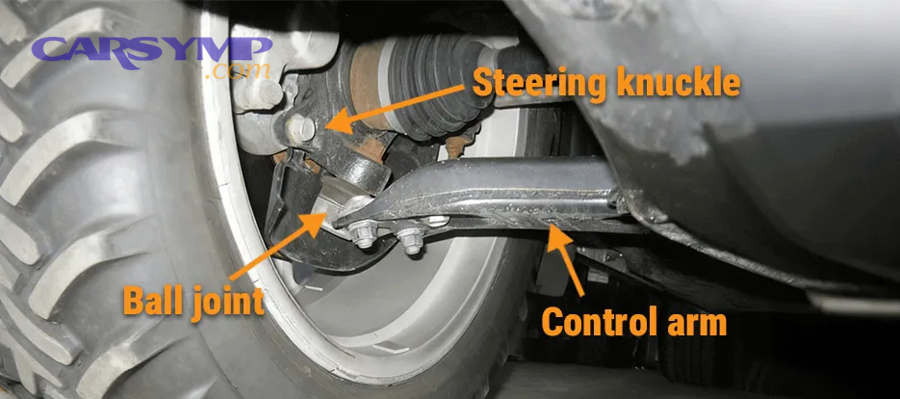
Ball joint failure symptoms usually show up as a mix of noise, looseness, vibration, and uneven tire wear—because a worn ball joint can’t hold the steering knuckle stable while your suspension moves through bumps and turns. To reduce risk and repair costs, you’ll want to recognize bad ball joint signs early, then confirm them with a simple inspection that matches your suspension type (loaded vs.
Daniel James Carter January 18, 2026 at 6:49 PM
Choose Specialty Repair Shops via Reviews for Drivers: Generalist vs Specialist
If you want the right fix the first time, choose the shop whose reviews prove repeatable expertise in your exact problem—not just a high star score. Next, you can map “specialty signals” in reviews (tools, test steps, and outcomes) to your car’s symptom category, so your shortlist fits the job.
Daniel James Carter January 18, 2026 at 6:35 PM
Decode Warranty Signals in Reviews for Drivers: Green Flags vs Red Flags
Warranty mentions and “had to come back” stories are not noise—they’re the clearest accountability signals hidden inside customer narratives. When you read reviews the right way, you can estimate whether a shop fixes problems correctly the first time, and whether they stand behind the work when something fails.
Daniel James Carter January 18, 2026 at 6:27 PM
Use Reviews to Estimate Fair Auto Repair Prices, Not Inflated Ones
You can use real customer reviews to estimate a fair price range for a repair before you approve work, as long as you treat reviews like imperfect field data—not a single “truth.” The goal is to build a realistic range, then verify it with an itemized estimate.
Daniel James Carter January 18, 2026 at 6:21 PM
Write a Helpful Auto Repair Review: Clear vs Vague Tips for Drivers
A helpful repair review is one that makes the next driver’s decision easier by explaining what happened, what was done, and what results you actually observed—without guessing or exaggerating. Beyond a star rating, your words can show how the shop communicated, whether timelines were realistic, and how they handled surprises such as extra parts, approvals, or delays.
Daniel James Carter January 18, 2026 at 6:12 PM
Spot Red-Flag vs Trustworthy Shop Review Replies for Car Owners
Red flags in shop responses to reviews are often more revealing than the star rating itself because they show how a business behaves when nobody is standing at the service counter. If you can read the response patterns correctly, you can predict whether a shop will communicate clearly, take responsibility, and fix problems—or deflect, deny, and pressure you once your car is already apart.
Daniel James Carter January 18, 2026 at 6:05 PM
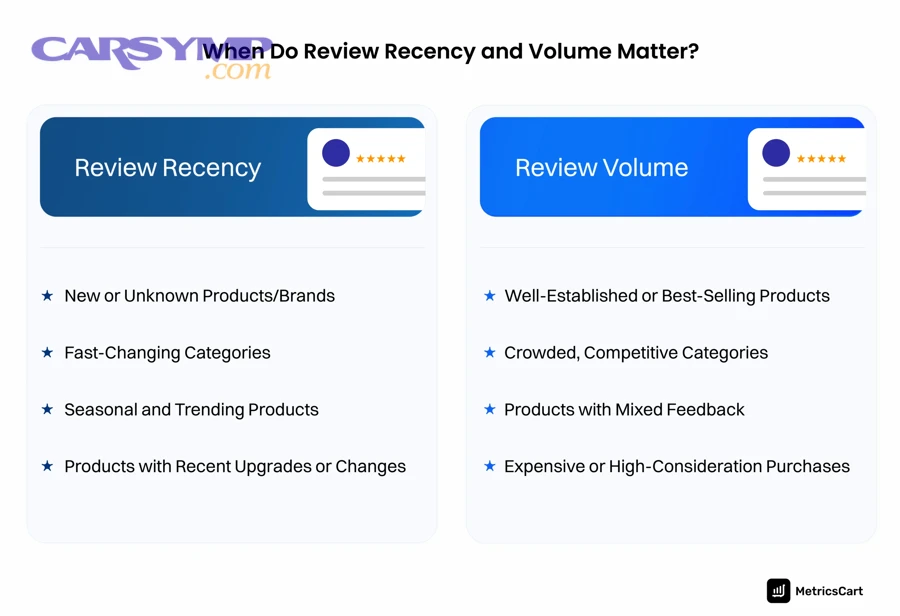
Compare Review Score vs Volume to Pick Shops: Drivers’ Quality vs Quantity
Comparing review score vs review volume is the fastest way to separate “looks good” from “proven good” when you’re choosing an auto repair shop, because the score signals satisfaction while the volume signals reliability under repetition. To make that comparison useful, you need to understand statistical confidence: a 4.
Daniel James Carter January 18, 2026 at 5:56 PM
Ask Smart Post-Review Questions for Drivers: Signals vs Red Flags
After you’ve read a shop’s reviews, the best next step is simple: ask targeted questions that turn opinions into verifiable facts—about process, proof, and accountability—before you book. Beyond that, you want to know whether the praise is consistent for the same kind of work you need, and whether the shop’s communication style matches your expectations when something changes mid-repair.
Daniel James Carter January 18, 2026 at 5:51 PM
Spot Review Patterns Predicting Quality Auto Repair Service for Drivers: Signals vs Noise
Review patterns can predict quality service when you look beyond the star average and focus on repeatable evidence: consistent outcomes, specific diagnostics, transparent pricing, and accountable follow-through across many customers and months. Beyond that core goal, you’ll also want to separate “good vibes” from real competence by tracking how reviewers describe communication, timelines, and whether the fix actually lasted after the visit.
Daniel James Carter January 18, 2026 at 5:44 PM
Find Best Auto Repair Review Sites for Drivers, Not Dealers
If you want a shop you can trust, the fastest shortcut is knowing the best sites for auto repair shop reviews —and using them the right way to separate consistent workmanship from clever marketing. Next, you’ll learn how to weigh platforms that look similar on the surface but behave differently underneath—especially when star ratings, filters, and “recommended” sections can change what you see.
Daniel James Carter January 18, 2026 at 5:33 PM
How to Spot Fake Mechanic Reviews: Real vs Phony for Drivers
How to spot fake mechanic reviews, fake shop reviews, review authenticity checks, mechanic reputation verification Fake mechanic reviews are common enough that a smart driver should assume some “too perfect” feedback is manufactured—then verify what’s real before trusting it. The fastest way to spot them is to check for specific repair evidence , natural detail , and consistent reviewer behavior across time and platforms.
Daniel James Carter January 18, 2026 at 5:28 PMHandle Emergency After-Hours Service Booking for Drivers: Urgent vs Routine
Emergency car trouble after hours is stressful, but you can reduce risk and wait-time by making one clear decision first: is this a true emergency or a problem that can safely wait until morning? From there, the fastest path is to request the right type of help (tow, mobile mechanic, or an on-call shop) and send the exact details a dispatcher or technician needs to act without back-and-forth.
Daniel James Carter January 18, 2026 at 5:09 PM
Choose Loaner Cars vs Shuttle Service for Auto Repair Customers
Loaner car and shuttle options are transportation solutions that keep you mobile while your vehicle is in the shop, and the right choice depends on your schedule, distance, and risk tolerance. Most customers want certainty : how long they’ll be without their car, what they’ll pay (or be held for), and what happens if plans change—so understanding the common policies upfront prevents last-minute stress.
Daniel James Carter January 18, 2026 at 5:00 PM
Prepare Your Car for Service Visit: Driver Checklist vs Common Mistakes
To prepare your car before a service visit, focus on three things: clarify the problem, remove anything that slows technicians down, and bring the right information so the shop can diagnose and repair faster. Beyond the basics, you’ll also want to organize your paperwork and permissions so you can approve work quickly, avoid delays, and prevent surprise charges caused by missing context.
Daniel James Carter January 18, 2026 at 4:53 PM
Explain Policies: Cancel or Reschedule Auto Repair Visits, No-Show vs Change
Cancellation and reschedule policies are the “rules of the road” that tell you what happens when plans change—whether you need to move your service time, can’t make it at all, or arrive late. Done well, these policies protect both you and the shop by keeping expectations clear and costs predictable.
Daniel James Carter January 18, 2026 at 4:47 PM
Ask Before You Confirm: Auto Repair Appointment Questions vs Assumptions for Drivers
Before you confirm a service visit, the smartest move is to ask a short, specific set of questions that turns vague promises into clear expectations about cost, time, responsibility, and results. Beyond preventing surprises, the right questions help you describe the problem precisely, choose the correct type of visit, and avoid scheduling the wrong amount of time for your car.
Daniel James Carter January 18, 2026 at 4:39 PM
Choose the Right Booking: Diagnostics vs Specific Repair for Drivers
Booking for diagnostics vs specific repair is a decision that can save you time, money, and frustration, because it determines how the shop will test, quote, and prioritize your car. If you only know the symptom, diagnostics is usually the safer starting point, since it confirms the root cause before parts are ordered or labor is committed.
Daniel James Carter January 18, 2026 at 4:32 PM
Know What to Expect at Drop-Off for Auto Repair Customers: Arrival vs Pickup
At drop-off, you’re not just handing over keys—you’re starting a shared plan for diagnosis, authorization, updates, and return timing. If you know what will happen in the first 10 minutes, you can avoid missed details that lead to delays or surprise charges.
Daniel James Carter January 18, 2026 at 4:27 PM
Choose Same-Day vs Next-Day Auto Repair Appointments for Drivers: Fast or Flexible?
Same-day service is best when a problem affects safety, drivability, or a tight schedule; next-day service is usually better when the job needs parts, deeper diagnostics, or a calmer plan for transportation and budget. However, the “right” choice depends on three things you can predict quickly: how urgent the symptom is, how likely the shop already has parts on hand, and how much uncertainty the diagnosis still has.
Daniel James Carter January 18, 2026 at 4:18 PM
Drivers: Share Right vs Wrong Info When Booking a Repair
The best info to provide when booking a repair is the information that lets a shop plan the right time, the right people, and the right parts—before your car ever rolls into the bay. When you share the right details up front, the appointment goes smoother and the diagnosis is faster.
Daniel James Carter January 18, 2026 at 4:12 PM
Explain How Online Auto Repair Booking Works for Drivers: Digital Scheduling
Online auto repair booking works like a guided checkout: you describe the problem or maintenance need, pick a shop and time slot, share vehicle details, and receive confirmation—often with reminders, messaging, and easy rescheduling built in. To make a smooth service appointment , the system usually asks for your car’s basics (year/make/model, mileage, VIN optional) and your preferred timing, then matches that to shop capacity and technician availability.
Daniel James Carter January 18, 2026 at 4:03 PM
Spot Hidden Costs and Common Upsells: Transparent Auto Repair Guide for Drivers
Hidden costs and common upsells are the extra charges, add-on services, or “recommended” parts that inflate a repair bill beyond what you expected—often because the scope wasn’t clearly defined upfront. Beyond the sticker price, many drivers struggle to tell the difference between a legitimate safety-related add-on and a convenience upsell bundled into the estimate.
Daniel James Carter January 18, 2026 at 3:51 PM
Estimate DIY Alternator Replacement Cost for DIYers vs Shop Prices
DIY alternator replacement can be one of the highest-value driveway repairs because you’re mostly paying for the part, not labor. If your vehicle has reasonable access and you already own basic hand tools, the total can stay surprisingly controlled while restoring reliable charging power.
Daniel James Carter January 18, 2026 at 3:45 PM
Understand Warranty Terms: Coverage vs Exclusions for Car Owners
Warranty terms are the written rules that decide whether a repair is paid for by the warranty provider or paid out-of-pocket by you. In plain language, they define what’s covered , what’s not , and the exact conditions you must meet to get approved.
Daniel James Carter January 18, 2026 at 3:37 PM
Diagnostic Fee vs Replacement Cost: Understanding What You Pay For and When
Diagnostic fees are typically separate charges from replacement costs, though many service providers credit the diagnostic fee toward your final repair bill if you approve the work at their facility. The diagnostic fee covers the labor, specialized equipment, and expertise required to identify the root cause of your problem, while the replacement cost includes parts and installation labor.
Daniel James Carter March 2, 2026 at 8:05 AM
12 Hidden Factors That Increase Parts Costs (Beyond the Price Tag)
Parts costs extend far beyond the sticker price, with 12 hidden factors adding substantial expenses through manufacturing overhead, supply chain markups, labor requirements, regulatory fees, and time-related premiums that can double or triple the visible purchase price. These hidden costs include raw material fluctuations, research and development recovery, freight expenses, inventory carrying charges, skilled labor shortages, tariffs and import duties, certification requirements, shortage premiums, minimum order quantity penalties, quality assurance programs, OEM branding premiums, and defect management expenses.
Daniel James Carter March 2, 2026 at 8:30 AM
Compare Dealer vs Independent Alternator Pricing for Drivers: OEM vs Aftermarket
Dealer service department; independent repair shop; alternator; labor rate; diagnostic fee; OEM alternator; aftermarket alternator; remanufactured alternator; warranty; core charge; serpentine belt; belt tensioner; battery; voltage regulator; ECU charging strategy; scan tool; parts markup; flat-rate time; estimate breakdown; authorization; comeback rate. Dealers usually charge more for alternator work, while independent shops often win on price; the “right” choice depends on your vehicle’s complexity, warranty status, and how transparent the estimate is.
Daniel James Carter January 18, 2026 at 3:13 PM
Compare Costs for Car Owners: OEM vs Aftermarket vs Reman (New vs Rebuilt)
OEM usually costs the most, aftermarket often wins on price variety, and reman can deliver near-OEM performance for less—if you verify the rebuilder’s process, warranty, and core policy. Beyond sticker price, the real comparison is total cost: fitment risk, downtime, warranty friction, and how likely you are to pay twice for the same repair.
Daniel James Carter January 18, 2026 at 3:06 PM
Explain Labor Cost Breakdown & Time for Drivers: Rate vs Flat-Rate
Labor cost breakdown and time is the clearest way to predict what you’ll actually pay for a repair, because it converts “work” into billable hours and explains why those hours add up. To make the number feel less like a mystery, you need to know what the shop is charging for (diagnosis, access, removal/installation, testing, and verification) and how time is measured (actual clock time versus flat-rate book time).
Daniel James Carter January 18, 2026 at 2:59 PM
Estimate Alternator Price Range by Vehicle for Drivers: New vs Reman
If you’re trying to pin down an alternator price range by vehicle , the shortest honest answer is: it depends on the vehicle’s electrical demand, alternator design, and how hard it is to access . You can still estimate a reliable range—often within a few hundred dollars—by matching your vehicle to the right segment and cost drivers.
Daniel James Carter January 18, 2026 at 2:51 PM
Estimate Average Alternator Replacement Cost for Drivers: Parts vs Labor
The average alternator replacement cost in the U.S.
Daniel James Carter January 18, 2026 at 2:45 PM
Diagnose Common Alternator Noise Causes for Drivers: Whine vs Growl
Common alternator noise causes usually come from two places: mechanical parts (belt, pulley, bearings) and electrical behavior (charging ripple, poor grounds, interference). If you can match the sound to when it happens, you can narrow the fault fast.
Daniel James Carter January 18, 2026 at 2:32 PM
Diagnose Alternator vs Battery vs Starter for DIY Drivers—No-Start vs No-Charge
Alternator vs battery vs starter diagnosis is easiest when you treat the starting/charging system like a chain: power storage (battery), power generation (alternator), and power delivery (starter + cables). If one link fails, your car either won’t crank, won’t stay running, or keeps killing batteries.
Daniel James Carter January 18, 2026 at 2:28 PM
Assess Driving Risk with a Failing Alternator: Safe vs Dangerous
Yes, you can sometimes drive with a failing alternator —but it’s usually a short, risky window, not a “keep driving for days” situation. In most cars, once charging output drops too low, the battery becomes the only power source, and that power runs out faster than people expect.
Daniel James Carter January 18, 2026 at 2:20 PM
Optimize How-To Battery Charging After Replacement for Drivers: Jump-Start vs Recharge
After replacement battery charging tips come down to one goal: get the battery to a stable state of charge while confirming the charging system can maintain it during real-world driving. Beyond “it starts,” you also want to verify voltage behavior under load, because lights, HVAC blowers, heated seats, and modern electronics can expose weak connections or regulation problems quickly.
Daniel James Carter January 18, 2026 at 2:15 PM
Compare New vs Reman Alternators Pros/Cons for Car Owners (OEM vs Aftermarket)
A new alternator tends to win when you want the lowest uncertainty and the cleanest “install-and-forget” path, while a quality remanufactured alternator often wins when you want strong value without giving up a like-new driving experience. Beyond price, the real decision lives in risk management: part quality controls, predictable fitment, warranty strength, and how much downtime you can tolerate if something goes wrong.
Daniel James Carter January 18, 2026 at 2:09 PM
Replace Alternator: How-To Steps for DIY Drivers, Not Repair
If your vehicle is showing charging-system trouble, an alternator replacement steps overview helps you move from diagnosis to a verified fix without guessing. The core method is simple: make the car safe, relieve belt tension, disconnect wiring, remove the unit, install the new alternator, then confirm correct charging.
Daniel James Carter January 18, 2026 at 2:00 PM
How to Inspect Serpentine Belt and Tensioner During Replacement for DIYers
If you’re already “in there” replacing a belt, the smartest move is to verify the belt, tensioner, and pulleys as one working system—because a new belt can’t perform on worn geometry, weak spring force, or misaligned bearings. You’ll learn what to check on the belt itself (wear patterns that matter more than cracks), how to judge tensioner travel and damping, and how to catch pulley or alignment issues that quietly destroy a fresh install.
Daniel James Carter January 18, 2026 at 1:53 PM
Estimate Alternator Labor Time for Drivers: Fast vs Slow Jobs
Alternator replacement labor time is usually a 1–2 hour professional job, but real-world labor can range from under 1 hour on easy-access engines to 4–6+ hours on vehicles where the alternator is buried behind brackets, cooling components, or tight packaging. To make the estimate accurate, you need to connect labor time to the why : alternator location, belt layout, fastener access, electrical connectors, and whether related parts (belt, tensioner, idler, battery cables) must be removed to create working space.
Daniel James Carter January 18, 2026 at 1:46 PM
Diagnose Charging System: Alternator Testing with Multimeter for Drivers, Not Guessing
Alternator testing with multimeter is a practical how-to method to confirm whether your battery is being recharged while the engine runs—and to pinpoint whether a “no start” feeling is really a charging problem or something else. To make the result trustworthy, you’ll run a structured charging system test that starts with the battery at rest, then moves to live readings at idle and under load, so you can separate weak output from wiring losses.
Daniel James Carter January 18, 2026 at 1:39 PM
Spot Alternator Failure Symptoms for Drivers: Bad Alternator Signs
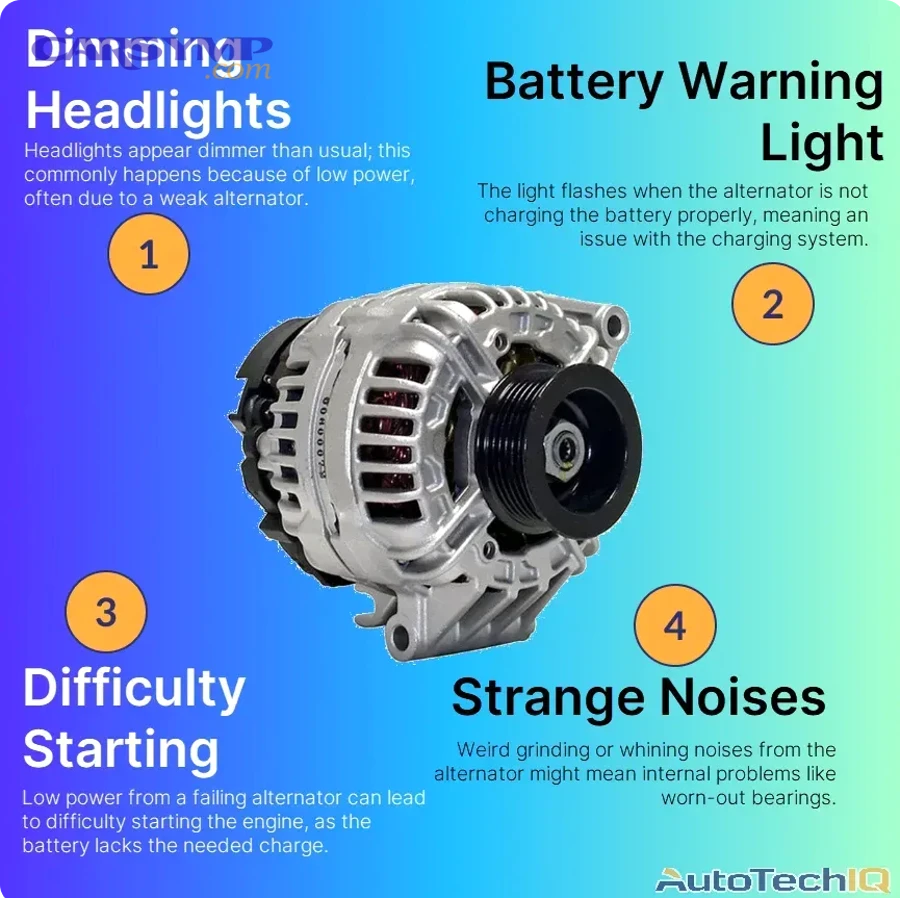
Alternator failure symptoms usually show up as unstable electrical power while driving—warning lights, dim or fluctuating headlights, weak accessories, and a battery that keeps “mysteriously” dying even after you charge or replace it. In practice, the fastest way to protect yourself from a roadside breakdown is to recognize bad alternator signs early, then confirm them with a couple of simple observations and tests before the car stalls.
Daniel James Carter January 18, 2026 at 1:30 PM